South America · PE / PER
Flag of Peru
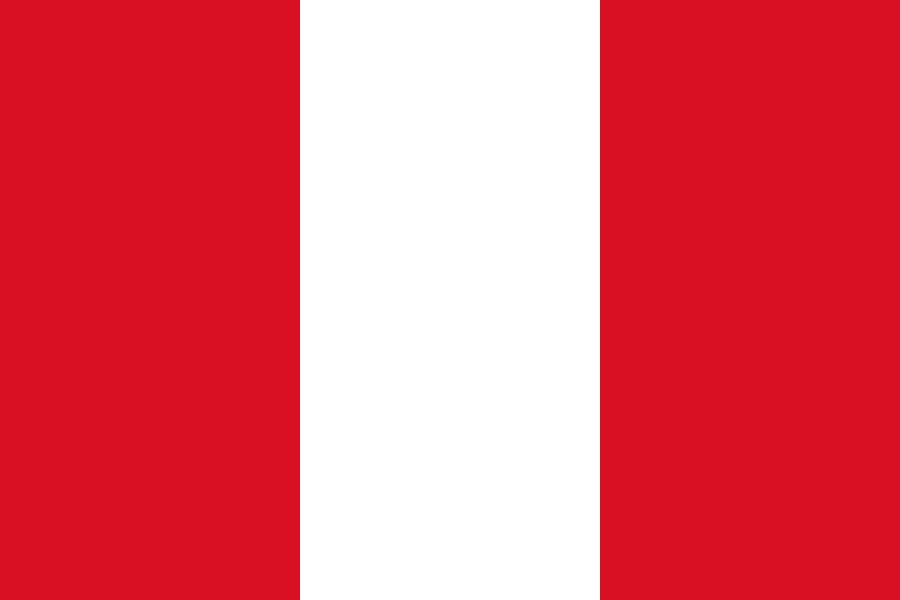
The Peru flag is a vertical triband of red, white and red. Peru has two official versions: a plain one for the public and a state flag with the national coat of arms on the white band. A legend says San Martín took its colors from a flock of flamingos.
What the flag of Peru looks like
The Peruvian flag has three vertical stripes of equal width: red at the hoist, white in the middle and red at the fly. The proportions are 2:3. The red is a bright, slightly warm red, and the white is plain.
Peru uses more than one version of the flag, which is a frequent source of confusion:
- The national (civil) flag is the plain red-white-red triband. Ordinary citizens can fly it.
- The state flag and the war flag have the national coat of arms in the center of the white stripe. They are used by the government, the armed forces and official bodies.
The coat of arms shows a shield divided into three fields. In the top left is a vicuña, a relative of the llama, on a light blue field. The top right shows a cinchona tree (the source of quinine) on a white field, and the lower field is red with a golden cornucopia spilling out gold coins. The shield is surrounded by a laurel wreath on one side and a palm branch on the other, and an oak-leaf crown tops it. Together, the three fields stand for the country's animal, plant and mineral wealth.
The small version of the flag is shown as the Peru flag emoji, which uses the plain version. You can also get an image from the download page.
Peru flag colors
Color codes measured from the official design. Use HEX for the web and CMYK for print.
HEX
#D91023RGB
217, 16, 35CMYK
0, 93, 84, 15HEX
#FFFFFFRGB
255, 255, 255CMYK
0, 0, 0, 0Peruvian flag meaning and symbolism
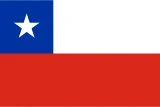
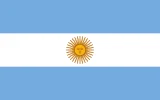
The most popular story is about José de San Martín, the Argentine general who led the liberation of Peru. According to the Peruvian author Abraham Valdelomar, San Martín arrived on the southern coast near Pisco in 1820 and was inspired by the colors of the parihuanas, red-and-white flamingos. Other historians suggest he took the red from the flag of Chile and the white from the flag of Argentina, recognizing the origin of the men of the liberation army. The symbolism of the original colors is uncertain.
The usual explanation is that red represents the blood spilled by the fallen freedom fighters and white represents purity and peace, though the reasons red and white were chosen are unknown.
The elements of the coat of arms have clearer meanings. The vicuña stands for the animal kingdom, the cinchona tree for the plant kingdom and the cornucopia for minerals and the country's wealth. The wreath of laurel is a symbol of victory, and the palm branch is a symbol of peace.
History of the Peruvian flag
Before independence, Peru was part of the Spanish Empire and used Spanish banners. José de San Martín created the first flag of the Republic of Peru, decreed on 21 October 1820. It was divided diagonally into four parts, white at the top and bottom and red at the sides, with a laurel crown around a sun rising behind mountains by the sea. Peru declared independence on 28 July 1821. The flag was hard to construct, and in March 1822 Torre Tagle decreed a horizontal red-white-red design with a golden sun; it resembled the Spanish flag from a distance, so on 31 May 1822 it was replaced by a vertical triband with red outer bands, a white middle band and a golden sun.
On 25 February 1825, under Simón Bolívar's administration, the Constituent Congress passed the law of national symbols. The sun was replaced by a new coat of arms, designed by José Gregorio Paredes and Francisco Javier Cortés, placed in the center of the white band. The coat of arms was slightly altered in 1884 after the War of the Pacific.
In 1950 President Manuel A. Odría removed the coat of arms from the civil flag, which was easier to make and used in practice anyway, and created separate state and war flags. There are no official color tones set by law. The national flag is celebrated each year on 7 June, the anniversary of the Battle of Arica (1880), which is the Day of the Flag. Peru's national holidays, the Fiestas Patrias, are held on 28 and 29 July, when flags are flown across the country.
Flags that look like the Peruvian flag
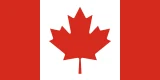
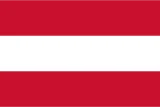
The closest flag is the flag of Canada, which also has red bands on either side of a white band. The Canadian flag has a maple leaf in the center and its bands are in a 1:2:1 ratio, so the white is twice as wide as each red band. Peru's three bands are equal in width. The flag of Austria is another red-white-red flag, but its stripes are horizontal.
Peru flag facts
| Country | Peru |
|---|---|
| Flag adopted | February 25, 1825 |
| Proportions | 2:3 |
| Colors | #D91023, #FFFFFF |
| Flag emoji | 🇵🇪 |
| Country code | PE, PER (ISO 3166) |
| Capital | Lima |
| Continent | South America |
| Population | 34,157,732 |
| Area | 1,285,216 km² |
| Currency | Nuevo sol |
| National anthem | National Anthem of Peru |
Peru flag: frequently asked questions
Is there a difference between state and civil Peru flags?
Peru has a plain red-white-red flag for citizens and a state flag with the coat of arms for state institutions. Both are official, and the difference is who uses which.
Which country has a cornucopia on their flag?
Peru's state flag has a cornucopia, shown spilling gold coins in the lower field of the coat of arms. It stands for the country's mineral wealth.
What do the colors of the Peruvian flag mean?
Red is usually said to stand for the blood shed for independence, and white for peace. A popular legend says San Martin took the colors from flamingos, but there is no official explanation.
What animal is on the Peruvian flag?
The animal is a vicuña, a wild relative of the llama that lives in the Andes. It appears on the coat of arms on the state flag, not on the plain civil flag.
Why did Peru change its flag?
Peru's first flag, decreed in 1820, was hard to make. A horizontal red-white-red design of March 1822 looked like the Spanish flag from a distance, so on 31 May 1822 it was replaced by the vertical triband. The coat of arms was added in 1825, and in 1950 it was removed from the civil flag, creating the separate state and war flags.
Which flag is most similar to the flag of Peru?
Canada's flag is the closest, with red bands on either side of a white band, but it has a maple leaf and its white band is twice as wide. Austria's flag is also red-white-red, but the stripes are horizontal. See the Canada flag and the Austria flag.