South America · SR / SUR
Flag of Suriname
The Suriname flag has five horizontal bands, green, white, wide red, white and green, with a large yellow five-pointed star in the middle of the red band. It was adopted on 25 November 1975, the day of independence from the Netherlands.
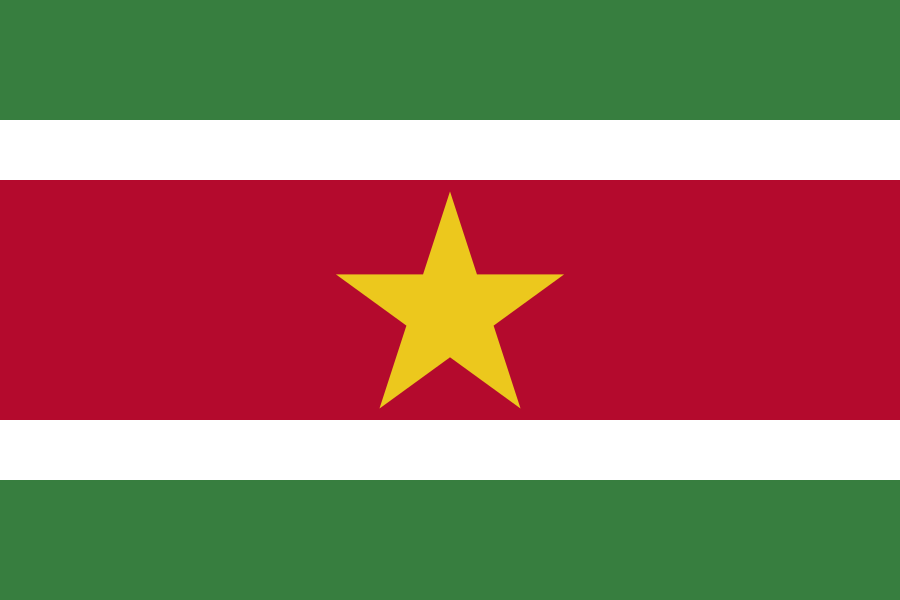
What the flag of Suriname looks like
The flag of Suriname is made of five horizontal bands. From top to bottom they are green, white, red, white and green. The red band in the center is the widest, twice as high as each green band and four times as high as each white one. A large yellow five-pointed star is centered on the red band, and one point of the star faces upward. The ratio is 2:3.
The wide red center stands out against the narrower white and green bands. Ready-to-use images are on the Suriname flag download page, and the emoji is at /suriname/emoji/.
Suriname flag colors
Color codes measured from the official design. Use HEX for the web and CMYK for print.
HEX
#377E3FRGB
55, 126, 63CMYK
56, 0, 50, 51HEX
#B40A2DRGB
180, 10, 45CMYK
0, 94, 75, 29HEX
#FFFFFFRGB
255, 255, 255CMYK
0, 0, 0, 0HEX
#ECC81DRGB
236, 200, 29CMYK
0, 15, 88, 7Suriname flag meaning and symbolism
The meanings most often given are:
- Green is for the fertility of the land and the richness of its agriculture.
- White is for freedom and justice.
- Red is for progress and hope.
- The yellow star stands for unity and a golden future, and reflects the sacrifices made for independence.
Suriname's people include descendants of enslaved Africans, Maroons, Indigenous peoples, and Hindustani, Javanese, Chinese and European communities, which is why national unity is a central theme.
History of the Suriname flag
Suriname was a Dutch colony from 1667, when the Netherlands received it from the British in exchange for New Amsterdam (New York). For most of that period the Dutch tricolor was used there. After 1954 it was an autonomous part of the Kingdom of the Netherlands, and in 1959 it adopted its own flag, designed by Noni Lichtveld: a white field with five colored stars joined by a black ellipse. The stars represented the main ethnic groups (black, brown, yellow, red and white) and the ellipse their harmonious relationship.
The 1959 flag was criticized for putting too much emphasis on ethnic differences. A national competition was held, and the winning design by the art teacher and graphic designer Jack Pinas, with some changes, was accepted by parliament. The present flag was adopted on 25 November 1975, the day Suriname became independent, and replaced the 1959 flag.
The design has been kept without changes since then.
Suriname among its neighbors
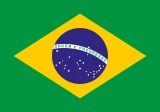
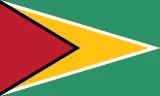
Suriname sits between Guyana, Brazil and French Guiana, and it is the only Dutch-speaking country in South America. Compare more designs on the South America flags page.
Suriname flag facts
| Country | Suriname |
|---|---|
| Flag adopted | November 25, 1975 |
| Proportions | 2:3 |
| Colors | #377E3F, #B40A2D, #FFFFFF, #ECC81D |
| Symbols | five-pointed star |
| Flag emoji | 🇸🇷 |
| Country code | SR, SUR (ISO 3166) |
| Capital | Paramaribo |
| Continent | South America |
| Population | 563,402 |
| Area | 163,270 km² |
| Currency | Surinamese dollar |
| National anthem | God zij met ons Suriname |
Suriname flag: frequently asked questions
What does the Suriname flag mean?
Green stands for the fertility of the land, white for freedom and justice, red for progress and hope, and the yellow star for unity and a golden future.
What country was Suriname before?
Suriname was a Dutch colony, called Dutch Guiana, before independence in 1975. Earlier, in the 17th century, it was briefly an English colony.
Where is Suriname a country?
Suriname is on the northern coast of South America, bordered by French Guiana to the east, Guyana to the west, Brazil to the south and the Atlantic Ocean to the north. Its capital is Paramaribo. It is often counted as part of the Caribbean region. See the flag of Guyana.