North America · CA / CAN
Flag of Canada
The Canada flag, known as the Maple Leaf flag, has a white square in the center of a red field with a red 11-pointed maple leaf on it. It was inaugurated on 15 February 1965 after a long national debate.
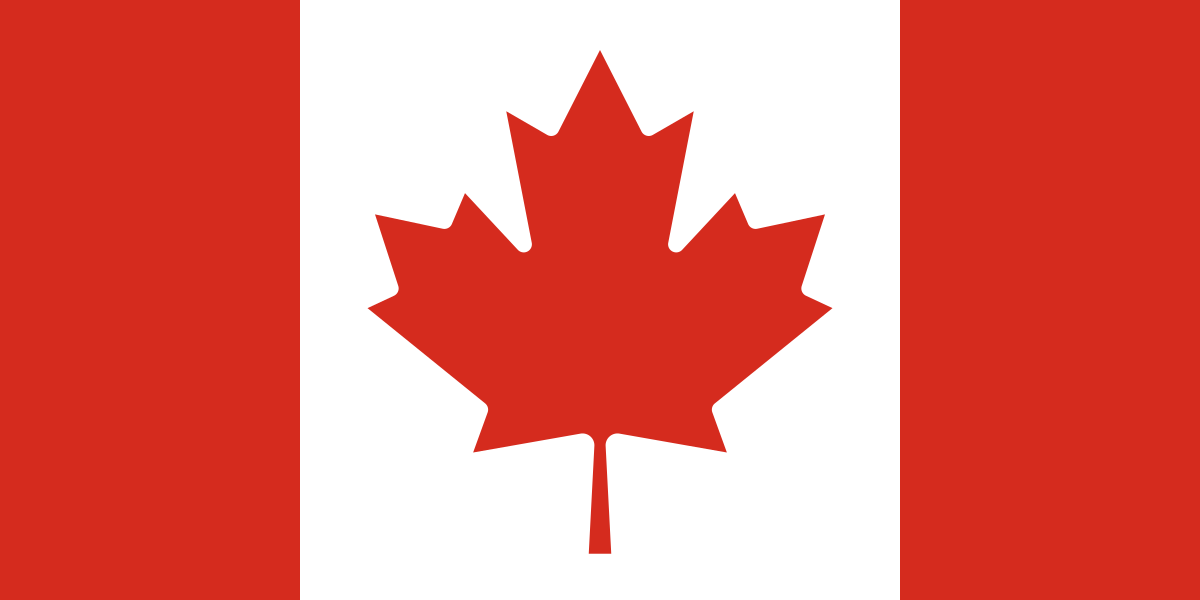
What the flag of Canada looks like
The flag of Canada is twice as long as it is tall, with a 2:1 ratio. It is built from three vertical sections: a red band at each end and a white square in the middle. The width of the red bands is half that of the white square (the ratio is 1:2:1), so the white part is an exact square. In the center of the white square is a stylized red maple leaf with eleven points.
This design is a "Canadian pale": a central band that takes up half the width of the flag rather than a third. The flag is symmetrical, so the front and back sides look identical. The number of points has no special significance; the leaf shape was chosen after wind-tunnel tests showed it to be the least blurry of the designs tested in high wind.
You can find the flag as the small Canada flag emoji, and an image for use is on the download page. The country is in North America, and you can compare the flag with its neighbors on the North American flags page.
Canada flag colors
Color codes measured from the official design. Use HEX for the web and CMYK for print.
HEX
#D52B1ERGB
213, 43, 30CMYK
0, 80, 86, 16HEX
#FFFFFFRGB
255, 255, 255CMYK
0, 0, 0, 0Canada flag meaning and symbolism
The maple leaf has been a Canadian emblem since the 19th century. It was used as a national symbol in 1868, when it appeared on the coats of arms of Ontario and Quebec, and it was on Canadian coins from 1876. In 1867 Alexander Muir composed the song "The Maple Leaf Forever", and in the two World Wars Canadian forces often used maple leaf badges.
By proclaiming the Royal Arms of Canada in 1921, King George V made red and white the official colors of Canada. The red came from St George's Cross and the white from the French royal emblem. At the flag's inauguration in 1965, the Governor General and the Speaker of the Senate described it as a symbol of unity.
History of the Canadian flag
For almost a century after Confederation in 1867, Canada had no official national flag. Many Canadians flew the British Union Jack, and from about 1870 the Canadian Red Ensign was used unofficially. It was a red flag with the Union Jack in the corner and the Canadian shield on the fly. A 1945 Order in Council approved it for use wherever a distinctive Canadian flag was desirable, but it never became the official national flag.
The question of a new flag came to a head in the 1960s. Prime Minister Lester B. Pearson wanted a flag that was distinctive and unmistakably Canadian. His favored design, the "Pearson Pennant", had three conjoined red maple leaves on a white field with blue borders. It led to weeks of acrimonious debate in the House of Commons in 1964, the "Great Flag Debate", with opposition leader John Diefenbaker as the main opponent of change. An all-party committee considered thousands of suggestions.
In a unanimous 15 to 0 committee vote, the single-leaf design won over the Pearson Pennant. It was inspired by the flag of the Royal Military College of Canada and is credited to George Stanley, then dean of arts at the college, who worked on it with John Matheson. The image of the maple leaf was designed by Jacques Saint-Cyr. The House of Commons approved the flag on 15 December 1964, the Senate two days later, and Queen Elizabeth II signed the proclamation on 28 January 1965. The Maple Leaf flag was first raised on Parliament Hill in Ottawa on 15 February 1965, which has been celebrated as National Flag of Canada Day since 1996.
Flags that look like the Canadian flag
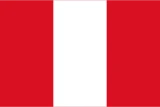
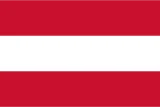
The flag of Peru is the closest match. It has a red-white-red design too, but its bands are equal and there is no leaf, and the flag is in a 2:3 ratio. Austria has red and white stripes, but they run horizontally. Canada's provinces and territories have their own flags, such as those of Quebec, Alberta and Yukon.
Canada flag facts
| Country | Canada |
|---|---|
| Flag adopted | February 15, 1965 |
| Proportions | 1:2 |
| Colors | #D52B1E, #FFFFFF |
| Symbols | maple leaf |
| Flag emoji | 🇨🇦 |
| Country code | CA, CAN (ISO 3166) |
| Capital | Ottawa |
| Continent | North America |
| Population | 36,991,981 |
| Area | 9,984,670 km² |
| Currency | Canadian dollar |
| National anthem | O Canada |
Canada flag: frequently asked questions
What does the maple leaf symbolize on the Canadian flag?
The maple leaf is a long-standing symbol of Canada and its identity. It has been a Canadian emblem since the 19th century.
What was the old flag of Canada?
Before 1965 Canada used the Union Jack and the Canadian Red Ensign, a red flag with a Union Jack in the corner and the Canadian shield on the right.
Why does Canada have two flags?
Canada has one national flag, the Maple Leaf flag. The Canadian Red Ensign and Union Jack are historical flags, and the Union Jack remains an official flag in Canada, flown beside it on certain days as a symbol of allegiance to the Crown and membership in the Commonwealth. Canada's provinces and territories also have flags of their own.
Who designed the Canadian flag?
George Stanley, a historian who was then dean of arts at the Royal Military College of Canada, proposed the design with a single maple leaf between red bars. Jacques Saint-Cyr designed the image of the leaf.
Why did Canada remove the Union Jack from its flag?
Prime Minister Lester Pearson wanted a flag that was distinctive and unmistakably Canadian. During the 1956 Suez Crisis, Egypt objected to Canadian peacekeepers partly because the Canadian Red Ensign carried the same Union Flag as the United Kingdom. The Maple Leaf flag replaced it in 1965, though the Union Flag remains an official flag in Canada.
Which country's flag is 🇨🇦?
The 🇨🇦 emoji is the flag of Canada, the red and white Maple Leaf flag with an 11-pointed red leaf. The name of the Canada flag is the Maple Leaf, and it is shown as the sequence of the letters C and A. See the Canada flag emoji page.