South America · AR / ARG
Flag of Argentina
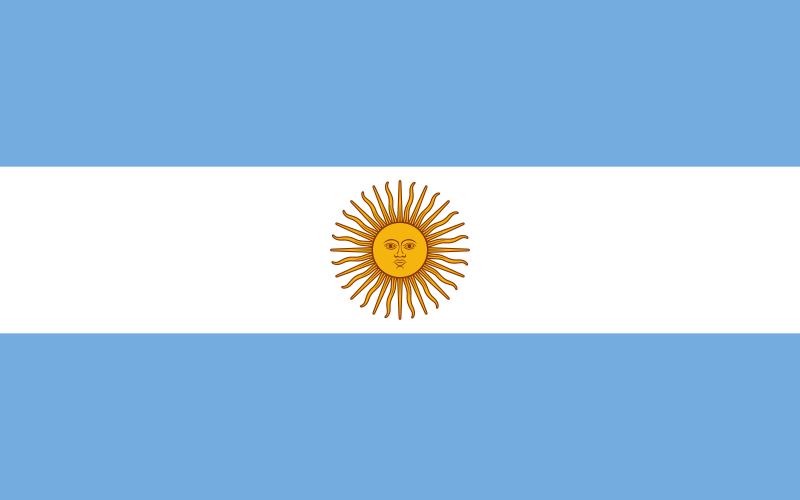
The Argentina flag has three equal horizontal bands: light blue, white and light blue. The official version carries the golden Sun of May, with a human face, in the center. Manuel Belgrano created it in 1812, during the fight for independence.
What the flag of Argentina looks like
The flag of Argentina has three horizontal bands of equal height. The top and bottom bands are a light sky blue, known in Spanish as celeste, and the middle band is white. Since 2002 the official proportions are 5:8 (10:16); 9:14 was the official ratio from 1978, and flags of 1:2 and 2:3 are also in use.
In the middle of the white band sits the Sun of May (Sol de Mayo), a golden-yellow sun with a human face. It has 32 rays, alternating between 16 straight and 16 wavy ones. The sun appears on the official flag of the nation, which is used by government institutions and at ceremonies.
There are two versions in common use. The bandera oficial de ceremonia has the Sun of May, and the bandera de ornato, the ornamental flag, has only the three stripes. The plain version is often used by citizens and hung from houses, while the one with the sun is used on official occasions. Both are considered the national flag, although the ornamental one must always be hoisted below the ceremonial one. For the small flag emoji, see the Argentina flag emoji.
Argentina flag colors
Color codes measured from the official design. Use HEX for the web and CMYK for print.
HEX
#74ACDFRGB
116, 172, 223CMYK
48, 23, 0, 13HEX
#FFFFFFRGB
255, 255, 255CMYK
0, 0, 0, 0Argentina flag meaning and symbolism
The most widespread popular belief is that the sky blue and white stand for the sky and clouds, a reading echoed in some songs to the flag. Historians usually set it aside and point instead to loyalty to the House of Bourbon, since the early government still claimed to act on behalf of the captive Spanish king Ferdinand VII. Other theories point to the colors of the early Buenos Aires coat of arms or to the plumes of the Los Patricios regiment in 1806-07. The light blue and white cockade came before the flag. There is no single agreed meaning.
The Sun of May is better documented. It is a replica of the engraving on the first Argentine coin, approved in 1813, and it is traditionally linked to the sun said to have appeared through the clouds during the May Revolution of 1810. The historian Diego Abad de Santillán claimed it represents Inti, the sun god of the Inca. The 32 rays, 16 straight and 16 wavy, are set by the law.
History of the Argentine flag
General Manuel Belgrano, who led the patriot army, wrote to the government on 26 February 1812 proposing a national flag in the colors of the new cockade, and on 27 February he presented a light blue and white flag at a battery on the Paraná River near Rosario. The ruling Triumvirate in Buenos Aires, still not prepared to declare independence, told him to take it down. Belgrano hoisted it again later that year in Jujuy. Argentines now celebrate Flag Day on 20 June, the anniversary of his death in 1820.
After independence was declared at the Congress of Tucumán on 9 July 1816, the blue and white flag was approved as the national flag on 20 July of that year. The Sun of May was added in 1818, when Juan Martín de Pueyrredón formally established the national flag with the sun as its central symbol. The design has been used with only minor changes since, and later laws and decrees fixed the shades and the form of the sun.
The name Argentina itself comes from the Latin word for silver, argentum, and the Río de la Plata, the River of Silver.
Flags that look like Argentina's
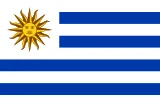
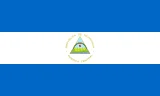
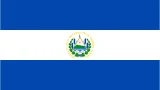
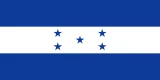
Several flags in the Americas share the blue and white of Argentina's. Uruguay's has nine stripes and a sun in the corner, and the Sun of May appears on it too. The flags of Nicaragua, El Salvador and Honduras also use blue and white bands, and the flag of the United Provinces of Central America that they descend from was based on Argentina's. The main difference is that Argentina's has the Sun of May on a plain three-band design.
Argentina flag facts
| Country | Argentina |
|---|---|
| Flag adopted | January 25, 1818 |
| Proportions | 5:8 |
| Colors | #74ACDF, #FFFFFF |
| Symbols | Sun, Sun of May |
| Flag emoji | 🇦🇷 |
| Country code | AR, ARG (ISO 3166) |
| Capital | Buenos Aires |
| Continent | South America |
| Population | 47,327,407 |
| Area | 2,780,400 km² |
| Currency | Argentine convertible peso |
| National anthem | Argentine National Anthem |
Argentina flag: frequently asked questions
Why does Argentina have two flags?
The official ceremonial flag has the Sun of May on the white stripe. The ornamental flag has no sun and is used by citizens. Both use the same colors and layout.
Why does the sun on the Argentinian flag have a face?
The Sun of May is drawn with a human face, as a replica of the engraving on the first Argentine coin, approved in 1813. One historian has linked it to the Inca sun god Inti, and it is traditionally tied to the sun said to have appeared during the May Revolution of 1810.
Who created the flag of Argentina?
Manuel Belgrano, a general and one of the leaders of the independence movement, created it in 1812 and first raised it in Rosario. The Congress of Tucumán made it official in 1816.
What flag is similar to the Argentina flag?
Uruguay's flag is the closest. Nicaragua, El Salvador and Honduras also use blue and white stripes, though they differ in layout and emblem.
When did Argentina change its flag?
The colors have been used since 1812, although the exact shade of blue has changed over time. The main change to the design was adding the Sun of May in 1818.
What was Argentina called before Argentina?
At independence, the country was known as the United Provinces of the Río de la Plata, whose May Revolution of 1810 began the break from Spain and whose independence was declared on 9 July 1816. The name Argentina comes from the Latin word for silver.
Why is the Uruguay flag so similar to Argentina?
Both descend from Manuel Belgrano's light blue and white flag. In 1814 José Gervasio Artigas, leader of what is now Uruguay, adopted a modified Belgrano flag with two narrow red stripes in the blue fields. Uruguay's flag today has blue and white stripes and a sun.