Europe · HU / HUN
Flag of Hungary
The flag of Hungary is a horizontal tricolor of red, white and green, from top to bottom. The colors come from the medieval coat of arms of the kingdom, and the tricolor was made official in the revolution of 1848.
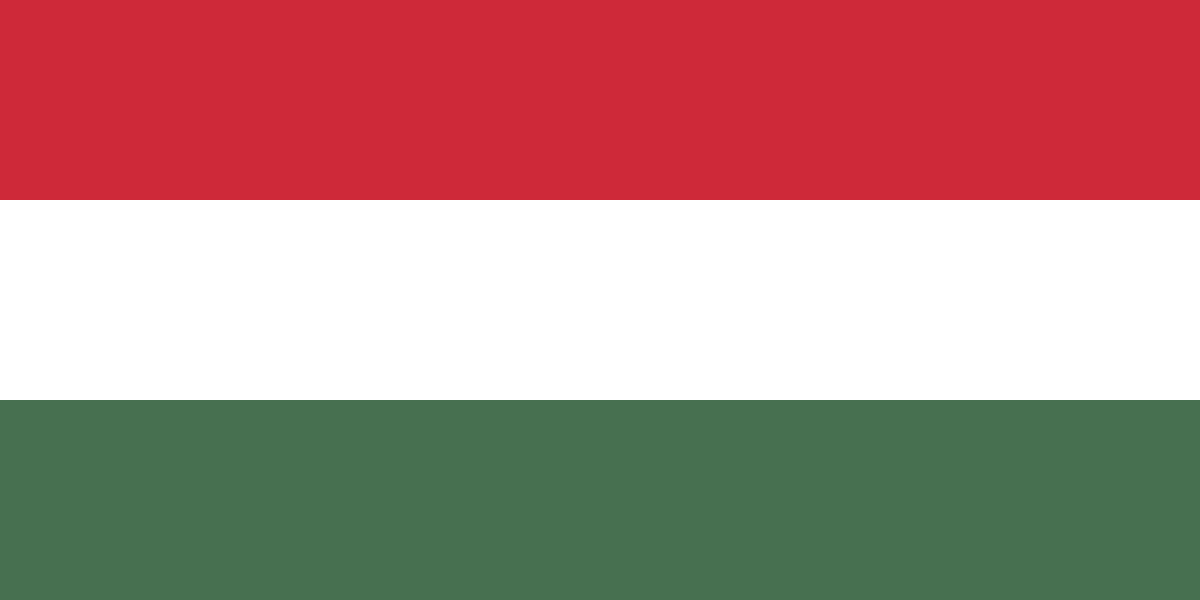
What the flag of Hungary looks like
The Hungarian flag has three horizontal stripes of equal height: red at the top, white in the middle and green at the bottom. The proportions are 1:2 on flags used on government buildings (a 1957 law sets 2:3 for seagoing merchant vessels). The national flag has no emblem, but the official coat of arms may be placed on it as a badge for state use. That version carries the coat of arms of Hungary in the center, a shield with red and white stripes on one side and a white double cross on three green hills on the other, topped by the Holy Crown of St Stephen. In everyday life, the plain tricolor is the one you will see most often.
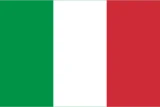
The plain tricolor uses the same three colors as the flag of Italy, but Hungary's stripes are horizontal with red on top, while Italy's are vertical with green at the hoist. For the small icon, see the Hungary flag emoji.
Hungary flag colors
Color codes measured from the official design. Use HEX for the web and CMYK for print.
HEX
#CE2939RGB
206, 41, 57CMYK
0, 80, 72, 19HEX
#477050RGB
71, 112, 80CMYK
37, 0, 29, 56HEX
#FFFFFFRGB
255, 255, 255CMYK
0, 0, 0, 0Hungary flag meaning and colors
The colors of the Hungarian flag come from the heraldry of the kingdom. The red, white and green colors are derived from the historical Hungarian coat of arms, whose red and silver stripes go back to the Árpád dynasty, Hungary's founding dynasty. In the romantic period, folklore gave the colors symbolic meanings:
- Red stands for strength.
- White stands for faithfulness.
- Green stands for hope.
An alternative reading is red for the blood spilled for the fatherland, white for freedom and green for the land and pastures of Hungary. The constitution that took effect on 1 January 2012 made the first reading official: strength, fidelity and hope.
History of the Hungarian flag
Red and white striped banners (the Árpád stripes) became common in the later Middle Ages. From the 15th century red, white and green appeared together, for example as twisted silk cords on seals, and in 1806 the red-white-green scheme was first formally described in the order known today. The tricolor became a symbol of national sovereignty during the Revolution of 1848 against Habsburg rule, and Act XXI of 1848 first mandated the red-white-green tricolor as a national symbol. After the revolution was defeated, the Austrian emperor prohibited the flag.
After the Compromise of 1867 the tricolor became legal again and was the official flag of Hungary, carrying the minor arms of Hungary as a badge until the end of the Habsburg Empire in 1918. The Austro-Hungarian monarchy was a dual monarchy with two equal halves, and the Austrian half used black and yellow. The tricolor stayed after 1918, though a solid red banner was used in the short-lived Hungarian Soviet Republic of 1919.
With the onset of communist rule in 1949, a new coat of arms with a red star was placed on the flag. In the 1956 uprising, revolutionaries cut the Hammer and Wheat emblem out of the flags, and the tricolor with a hole in the middle became a symbol of the revolution. After the revolution was crushed, the official flag has been a plain red-white-green tricolor since 1957. After the fall of communism in 1989 there was no need to change the flag, since it carried no communist insignia. Current rules, including the legal use of the coat of arms on the flag, are set out in law.
Hungary flag vs Italy and similar flags
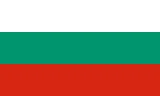
People often ask how to tell the Hungarian and Italian flags apart. Both use red, white and green, but Hungary has horizontal stripes with red on top and Italy has vertical stripes with green at the hoist. The proportions are different too, as Hungary's is 1:2 and Italy's is 2:3. The flag of Bulgaria is also close, with white, green and red stripes from the top. See also flags of the world.
Hungary flag facts
| Country | Hungary |
|---|---|
| Flag adopted | May 23, 1957 |
| Proportions | 1:2 |
| Colors | #CE2939, #477050, #FFFFFF |
| Flag emoji | 🇭🇺 |
| Country code | HU, HUN (ISO 3166) |
| Capital | Budapest |
| Continent | Europe |
| Population | 9,603,634 |
| Area | 93,011 km² |
| Currency | forint |
| National anthem | Himnusz |
Hungary flag: frequently asked questions
What country has a similar flag to Hungary?
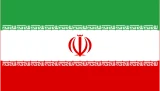
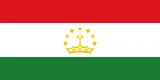
Italy uses the same colors in vertical stripes, and Bulgaria has horizontal stripes of white, green and red. Iran and Tajikistan also use the three colors in other layouts, with an emblem.
What is the difference between the Italian flag and the Hungarian flag?
Hungary's flag is horizontal, red over white over green (ratio 1:2 on government buildings, 2:3 at sea). Italy's is vertical, green, white and red, with a ratio of 2:3.
Why did Hungary change their flag?
The tricolor has been the national flag since 1848, but the communist government added an emblem in 1949. It was removed after the 1956 uprising, and the official flag has been the plain tricolor since 1957.
What language does Hungary speak?
Hungarian, also called Magyar, is the official language. It belongs to the Finno-Ugric family and is not related to Slavic or Germanic languages.
Did Austria-Hungary ever have an official flag?
No single flag for the whole state. The Austrian part used black and yellow (sometimes for the whole empire), while after the Compromise of 1867 the red-white-green tricolor became the official flag of Hungary.
Why did Austria change its name to Austria-Hungary?
After the Compromise of 1867 the Austrian Empire became a dual monarchy with Austria and Hungary as two equal halves under one ruler. That is why the state is called Austria-Hungary, and Hungary's tricolor became legal again.