Asia · TJ / TJK
Flag of Tajikistan
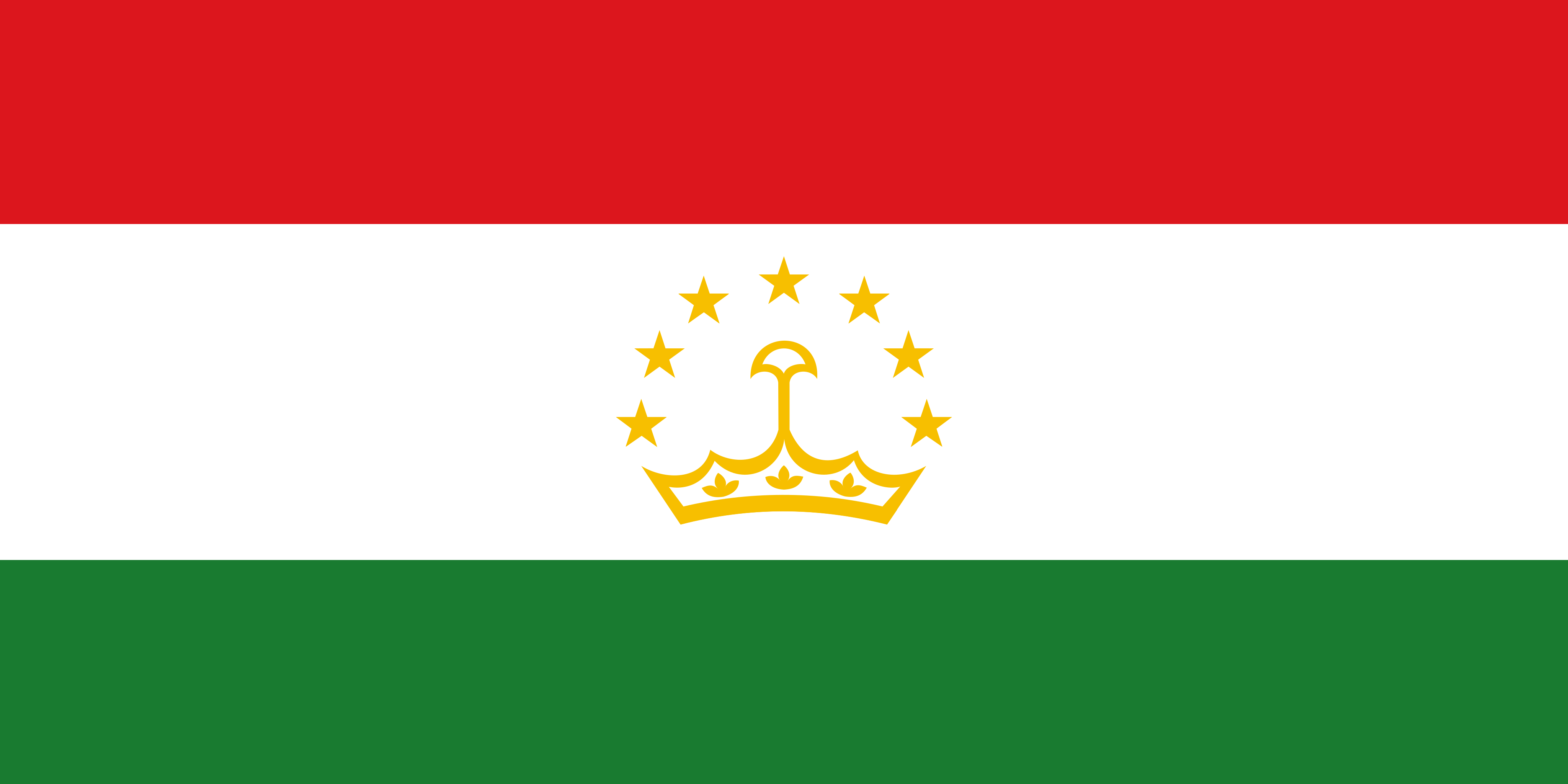
The Tajikistan flag is a horizontal tricolor of red, white and green with a golden crown under an arc of seven stars on the white band. Unusually, the white stripe is wider than the other two, and the flag has no Soviet symbols left.
What the flag of Tajikistan looks like
The national flag of Tajikistan has three horizontal stripes: red at the top, white in the middle and green at the bottom. The stripes are not equal. Red and green are each two parts of the height and white is three parts, so the white band is half again as wide as the others. The flag itself is twice as long as it is tall (a 1:2 ratio), which is longer than most national flags.
In the center of the white stripe is a golden crown. Above it, seven golden stars form an arc, like a small arc of light. The same crown and stars appear on the national coat of arms.
Red, white and green appear on several flags of the region, but the unequal stripes and the crown make this one easy to recognize. The flag is also available as the Tajikistan flag emoji and in several formats on the download page.
Tajikistan flag colors
Color codes measured from the official design. Use HEX for the web and CMYK for print.
HEX
#FFFFFFRGB
255, 255, 255CMYK
0, 0, 0, 0HEX
#DC161DRGB
220, 22, 29CMYK
0, 90, 87, 14HEX
#197B30RGB
25, 123, 48CMYK
80, 0, 61, 52Tajikistan flag meaning and symbolism
The state describes the colors in terms of nature and the nation. Red is usually explained as the color of the unity of the nation, victory and sunrise. White stands for purity and is linked to cotton, the country's main crop, and to the snow and ice of the Pamir and other mountain ranges, which cover most of Tajikistan. Green represents nature, the fertile valleys and agriculture of the land, and is also commonly linked to Islam.
The crown is commonly read as a symbol of the Tajik people. It is not tied to a monarchy; it recalls the Samanid dynasty, and the name Tajik is popularly connected with the Persian word tâj, meaning crown. The seven stars are explained in different ways. The most common version says that seven is a number of perfection and happiness in Persian mythology, where the heavens have seven mountains and seven orchard gardens, with a star shining above each mountain. Because these explanations are traditional, they are best treated as popular interpretations, not fixed law.
History of the Tajikistan flag
Before the 20th century, the Tajik lands were ruled by the emirate of Bukhara and the khanate of Kokand, each with its own banners. Tajikistan then became part of the Russian Empire and, after 1917, the Soviet Union. In 1929 it became a full Soviet republic, and its flags in the following decades were red banners with Soviet emblems.
In 1953 the Tajik Soviet Socialist Republic got a new flag: a red field with a hammer, sickle and star, plus a white stripe and a narrower green stripe along the bottom. That design flew until the new flag replaced it, which made Tajikistan the last former Soviet country to receive a new flag. After the Soviet Union dissolved, Tajikistan declared independence in September 1991. The Soviet emblems were dropped, and on 24 November 1992 the country adopted the present red, white and green flag with the crown and seven stars, replacing the Soviet-era design.
The flag was adopted in the middle of a civil war that lasted until 1997. Its symbols were designed to belong to all Tajiks regardless of region. The flag has not been changed since. Flag Day is celebrated on 24 November, the date of adoption.
Tajikistan flag and its neighbors
Tajikistan borders Afghanistan, China, Kyrgyzstan and Uzbekistan. Tajik is a language close to Persian, and the Tajik flag is one of the few in Central Asia that uses red and green together. For other flags of the region, see flags of Asia.
Tajikistan flag facts
| Country | Tajikistan |
|---|---|
| Flag adopted | November 24, 1992 |
| Proportions | 1:2 |
| Colors | #FFFFFF, #DC161D, #197B30 |
| Symbols | crown, five-pointed star |
| Flag emoji | 🇹🇯 |
| Country code | TJ, TJK (ISO 3166) |
| Capital | Dushanbe |
| Continent | Asia |
| Population | 9,504,000 |
| Area | 143,100 km² |
| Currency | Tajikistani somoni |
| National anthem | National anthem of Tajikistan |
Tajikistan flag: frequently asked questions
What does the flag of Tajikistan symbolize?
Red stands for unity, victory and sunrise, white for purity, cotton and mountain snow, and green for nature, fertile valleys and Islam. The crown represents the Samanid dynasty and the Tajik people, and the seven stars stand for perfection and happiness.
Did Tajikistan change its flag?
Yes. As a Soviet republic it used a red flag with a hammer, sickle and star, later (from 1953) with white and green stripes added. The present flag was adopted on 24 November 1992 after independence and has not changed since.
What country did Tajikistan used to be?
Tajikistan was a republic of the Soviet Union from 1929 until independence in 1991. Before that it was part of the Russian Empire, and earlier of the emirate of Bukhara and the khanate of Kokand.
What is the Tajikistan flag emoji?
The flag emoji for Tajikistan is shown as TJ and looks like the national flag with red, white and green stripes. See the Tajikistan emoji page for more.
What is the difference between the Tajikistan flag and the Hungary flag?
Both are red, white and green horizontal tricolors, but Hungary's three stripes are equal. The Tajik flag has a white stripe one and a half times wider than the others, with a golden crown and seven stars on it. Iran's flag uses the same colors in reverse order, green on top. Compare the flag of Hungary.