Europe · DE / DEU
Flag of Germany
The German flag is a horizontal tricolor of black, red and gold. These colors are tied to the struggle for a free, united Germany in the early 19th century, and they have been the flag of democratic Germany since 1919, apart from the years of Nazi rule.
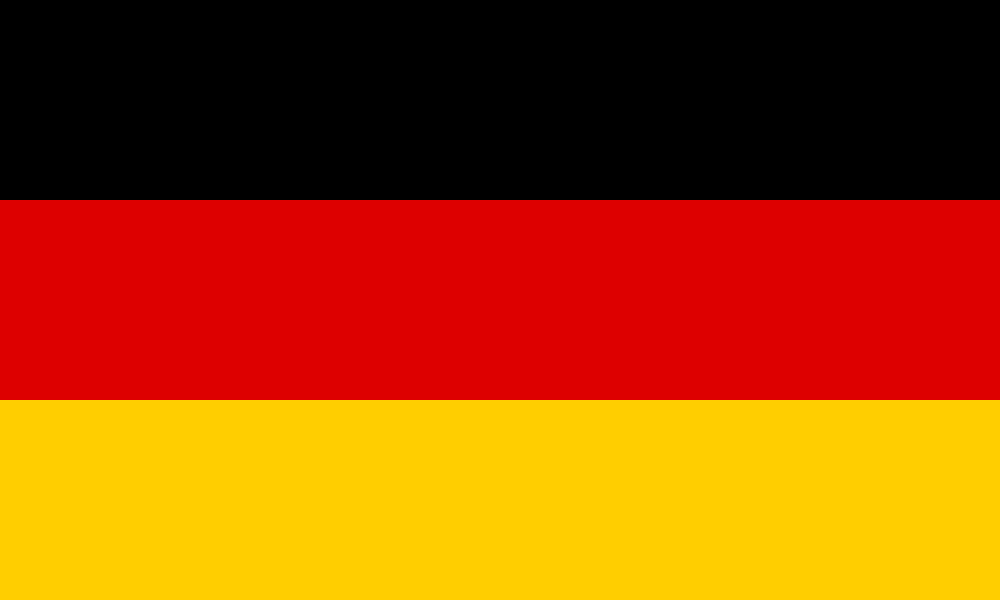
What the flag of Germany looks like
The flag of Germany has three horizontal stripes of equal height: black at the top, red in the middle and gold at the bottom. The proportions are 3:5. There is no emblem on the national flag that people fly at home or at sports events. The flag used by federal authorities, the Bundesdienstflagge, shows the federal shield with the eagle on the same stripes.
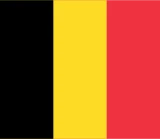
The third color is officially called gold, not yellow, and on screen and in print it appears as a deep yellow. The constitution says only that "the federal flag is black, red and gold", and the exact shades were only defined later, in a 1999 cabinet decision on the government's corporate design. The design is easy to confuse with Belgium, whose flag has black, yellow and red in vertical stripes. You can see the German flag in its smallest form in the Germany flag emoji.
Germany flag colors
Color codes measured from the official design. Use HEX for the web and CMYK for print.
HEX
#000000RGB
0, 0, 0CMYK
0, 0, 0, 100HEX
#DD0000RGB
221, 0, 0CMYK
0, 100, 100, 13HEX
#FFCE00RGB
255, 206, 0CMYK
0, 19, 100, 0German flag meaning and symbolism
The colors are often explained with a phrase popular in the 19th century: "from the blackness of servitude, through the blood of battle, to the golden light of freedom." A poem by Ferdinand Freiligrath from 1848 used related color imagery. Another reading says that black stands for determination, red for courage and gold for generosity. These readings are traditional and not part of the law.
The colors have a political meaning as well. For many Germans, black, red and gold mean democracy, civil rights and national unity based on a constitution, in contrast to the black, white and red flag of the empire, which stood for Prussian authority and, later, for the Nazis. Today the flag is flown at the national day of 3 October, which marks reunification in 1990, and at football matches, where it is used by supporters of the national team.
History of the German flag
The colors go back to 1813, when volunteers of the Lützow Free Corps fought against Napoleon in uniforms that were black with red facings and gold buttons. After the wars, students in fraternities, who wanted a unified and liberal Germany, adopted the colors, and black, red and gold flags were carried at the Hambach Festival in 1832. In 1848, during the revolution, the Frankfurt Parliament made them the colors of the planned German nation. The revolution failed and the colors were set aside.
In 1867 the North German Confederation under Prussia chose black, white and red, a mix of the Prussian black and white and the red and white of the Hanseatic cities. This became the flag of the German Empire in 1871. After the First World War, the Weimar Republic returned to black, red and gold in its constitution of 1919. Conservative groups kept using the old imperial colors, and the dispute between the two sets of colors was one of the political divides of the 1920s.
In 1933 the Nazi regime abolished the republican colors, and black, red and gold was not used as the national flag again until after the war. In 1949, both German states chose black, red and gold. East Germany added a hammer and compass emblem in 1959, and it was removed when the country was reunified in 1990. West Germany's Basic Law of 1949 (Article 22) is still the legal basis for the flag.
Why are there two German flags?
People who ask about two German flags usually mean the black, red and gold flag and the black, white and red flag of the German Empire (1871-1918). Only the first is the national flag. The imperial flag is a historical flag and no longer an official symbol. See more flags of Europe.
Germany flag facts
| Country | Germany |
|---|---|
| Flag adopted | May 23, 1949 |
| Proportions | 3:5 |
| Colors | #000000, #DD0000, #FFCE00 |
| Flag emoji | 🇩🇪 |
| Country code | DE, DEU (ISO 3166) |
| Capital | Berlin |
| Continent | Europe |
| Population | 83,467,117 |
| Area | 357,588 km² |
| National anthem | third stanza of the Deutschlandlied |
Germany flag: frequently asked questions
What are the two flags of Germany?
The national flag is black, red and gold. The older black, white and red flag was used by the German Empire from 1871 to 1918 and it is no longer an official symbol.
What is the correct flag of Germany?
The correct flag is a horizontal tricolor of black, red and gold, in that order from top to bottom. It is fixed by Article 22 of the Basic Law.
Why did Germany's flag change?
Its flag followed the country's politics. Black, red and gold were the colors of the 1848 revolution, the German Empire used black, white and red from 1867 to 1918, and the Weimar Republic returned to black-red-gold in 1919. The Nazi regime banned it in 1933, and it was restored in 1949.
Which flag is similar to the German flag?
Belgium's. It uses black, yellow and red like Germany's black, red and gold, but in vertical stripes instead of horizontal ones. Germany's flag is black on top, red in the middle and gold at the bottom, so the German flag vs Belgium flag question comes down to the direction and order of the stripes. See Belgium.
What was the original German flag?
The first flag in today's colors dates to 1848, when the Frankfurt Parliament declared black, red and gold the colors of Germany. The colors come from the uniforms of the Lützow Free Corps, volunteers who fought Napoleon in 1813: black with red facings and gold buttons.
Why did the German flag change after WW1?
After the 1918 revolution the German Empire ended, and the Weimar Constitution of 1919 made black, red and gold the flag instead of the imperial black, white and red. This tied the new democracy to the liberal movement of 1848. The 1920 German flag was therefore black-red-gold, in a 2:3 ratio.
What is Germany's oldest flag?
The Holy Roman Empire had no national flag, but its imperial banner was a black eagle on gold. The black-red-gold tricolor in its modern arrangement first appeared in 1778 on the flag of the small principality of Reuss-Greiz, long before it became the national flag.