Europe · NO / NOR
Flag of Norway
The Norway flag is red with a blue Nordic cross outlined in white, the offset cross shared by all the Nordic countries. It was designed by Fredrik Meltzer and adopted in 1821, and its red, white and blue were chosen as colors of freedom seen in the French, Dutch, American and British flags.

What the flag of Norway looks like
The Norwegian flag has a red field with a Scandinavian (Nordic) cross. The cross is dark blue and is bordered in white on all sides. The vertical arm of the cross is shifted toward the hoist, the side nearest the pole, which is the typical Nordic arrangement. The flag's proportions are 8:11.
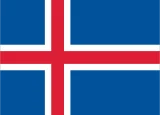
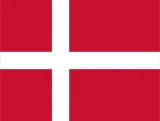
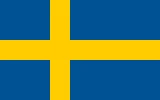
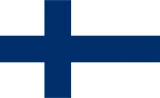
The red field is by far the largest part of the flag, which is why the flag looks mostly red at a distance. The blue cross is twice as wide as each white border, so the white forms a thin outline. The same layout is used on the flags of Denmark, Sweden, Finland, Iceland and the Faroe Islands, each with its own colors. Norway, Iceland and the Faroe Islands all combine red, white and blue.
There are two official forms. The ordinary rectangular flag is used by everyone. The state flag, used by the government and military, has a swallow-tail cut at the fly and is known in Norwegian as splittflagg. A smaller version of the flag appears as the Norway flag emoji, and you can get an image from the download page.
Norway flag colors
Color codes measured from the official design. Use HEX for the web and CMYK for print.
HEX
#BA0C2FRGB
186, 12, 47CMYK
0, 94, 75, 27HEX
#00205BRGB
0, 32, 91CMYK
100, 65, 0, 64HEX
#FFFFFFRGB
255, 255, 255CMYK
0, 0, 0, 0Norway flag meaning and symbolism
The designer, Fredrik Meltzer, left no written explanation of the final flag, but his earlier letters show his thinking. He rejected a red-and-white design as too similar to the Danish flag and recommended a tricolor of red, white and blue, "three colours that now denote freedom", as seen in the French, Dutch and American flags and the British Union. The red and blue were also understood at the time to refer to Denmark and Sweden, the former and present union partners.
The cross is a Christian symbol, and Meltzer's choice of a Nordic cross followed the tradition set by Denmark and Sweden. In Norway the cross also connects to the Dannebrog, the Danish flag that had also been Norway's for centuries.
History of the Norwegian flag
Norway was part of the Kingdom of Denmark-Norway until 1814, and Norwegian ships sailed under the Danish flag, a white cross on red. The medieval kings of Norway had their own banners; from 1280 Eirik Magnusson used a golden lion with axe and crown on red, which became the flag of the king of Norway and is still the Royal Standard.
In 1814 Norway adopted a constitution on 17 May and used the Danish flag with the Norwegian lion in the canton, as state and war flag until 1815 and as merchant flag until 1821. Later in 1814 Norway entered a union with Sweden. The current flag was designed in 1821 by Fredrik Meltzer, a member of the Storting (parliament), and both chambers adopted it on 11 and 16 May. The king refused to sign the flag law but approved the design for civilian use by royal order on 13 July 1821.
From 1844 the flag carried a "union mark" in the upper hoist corner, a symbol that showed the union with Sweden. Called Sildesalaten ("the herring salad") in jest, it grew unpopular as the union lost support, and the Storting abolished it from the merchant and state flags in 1898; the "pure" flag was first flown in 1899. After the union ended in 1905 the mark was removed from the navy flag as well.
Norway's national day is 17 May, Constitution Day, and it is one of the official flag days, along with Liberation Day on 8 May and Union Dissolution Day on 7 June.
How the Norwegian flag is used
Flag days are regulated by law, and the flag is flown on public holidays and at official events. The regulations say it is hoisted from 08:00 from March to October and from 09:00 from November to February, and lowered at sunset or by 21:00 at the latest. It should not touch the ground or be worn on the body below the waist. These rules do not apply to private use of the flag, but they are generally observed.
Norway lies in northern Europe, and you can compare the flag with others on the European flags page.
Norway flag facts
| Country | Norway |
|---|---|
| Flag adopted | July 13, 1821 |
| Proportions | 8:11 |
| Colors | #BA0C2F, #00205B, #FFFFFF |
| Symbols | Nordic cross |
| Flag emoji | 🇳🇴 |
| Country code | NO, NOR (ISO 3166) |
| Capital | Oslo |
| Continent | Europe |
| Population | 5,627,400 |
| Area | 385,207 km² |
| Currency | Norwegian krone |
| National anthem | Ja, vi elsker dette landet |
Norway flag: frequently asked questions
What is special about Norway's flag?
Its blue cross has a white border on a red field, the opposite of Iceland's flag, which has a red cross outlined in white on a blue field.
Why do Norway and Sweden have similar flags?
Both use a Nordic cross, a design that came from the Danish flag and spread across the Nordic countries. Sweden's is yellow on blue and Norway's is blue and white on red. Norway and Sweden were in a union between 1814 and 1905.
What are the colors of Norway?
The colors of the Norwegian flag are red, white and blue. Red is the main color, and the dark blue cross is bordered in white.
What is the alternate flag of Norway?
The state flag is the main alternative. It has a swallow-tail shape and is used by the government and military. The Sámi people also have their own flag, a separate flag for the Sámi, and 6 February, the Sámi National Day, is an official flag day in Norway.
Which countries share the same flag as Norway?
No country uses exactly the same flag. Iceland's flag is similar, with the colors reversed: a red cross outlined in white on a blue field.
What does the Norwegian flag symbolize?
Designer Fredrik Meltzer left no official explanation, but the red, white and blue were chosen as colors of freedom, as on the French, Dutch and American flags, and also recalled Denmark and Sweden. The cross is a Christian symbol, following the Nordic tradition that began with the Danish Dannebrog. This is the Norway flag meaning.
What is the old name of Norway?
The name comes from Old Norse Norðr vegr, "the way north", and the English form Norþweg appears around 890. Today the country's own names are Norge (Bokmål) and Noreg (Nynorsk).