Asia · IN / IND
Flag of India
The India flag, known as the Tiranga ("tricolor"), has three equal horizontal bands of saffron, white and green, with a navy-blue 24-spoke wheel, the Ashoka Chakra, at the center. It was adopted in July 1947, a few weeks before independence.
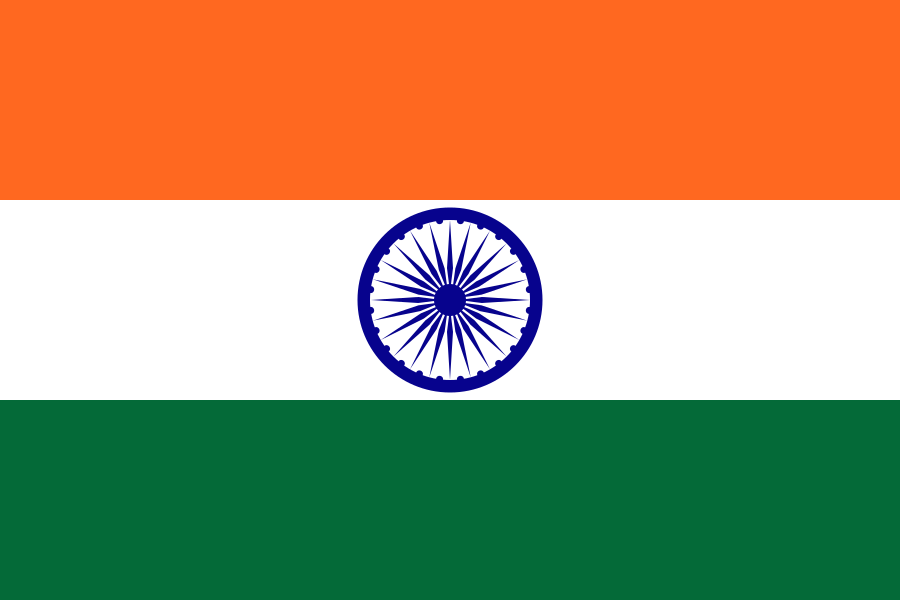
What the flag of India looks like
The national flag of India is a horizontal rectangular tricolor. The top band is saffron (a deep orange), the middle band is white and the bottom band is India green. The three bands are of equal height, and the flag's width-to-height ratio is 2:3.
In the center of the white band is a wheel in navy blue. This is the Ashoka Chakra, taken from the Lion Capital of Ashoka. The wheel has 24 spokes, evenly spaced, and is printed or painted in navy blue on both sides of the flag.
The flag is the same on both sides, and the chakra is printed or embroidered so that it looks identical from front and back. Flags were traditionally required to be made from hand-spun, hand-woven cotton or silk called khadi; in December 2021 the Flag Code was amended to allow machine-made flags and materials such as polyester. Colors and sizes for official flags are set by the Bureau of Indian Standards. You can see the flag in small sizes as the India flag emoji, or get an image from the download page.
India flag colors
Color codes measured from the official design. Use HEX for the web and CMYK for print.
HEX
#FF6820RGB
255, 104, 32CMYK
0, 59, 87, 0HEX
#046A38RGB
4, 106, 56CMYK
96, 0, 47, 58HEX
#FFFFFFRGB
255, 255, 255CMYK
0, 0, 0, 0Indian flag meaning and symbolism
The most widely quoted explanation comes from Sarvepalli Radhakrishnan, who later became India's second president. He explained the adopted flag after the Constituent Assembly chose it in July 1947. In his reading:
- Saffron stands for renunciation or disinterestedness: leaders should be indifferent to material gains and dedicate themselves to their work.
- White stands for light, the path of truth to guide conduct.
- Green stands for the relation of people to the soil and the plant life on which all other life depends.
- The Ashoka Chakra is the "wheel of the law" (dharma). It shows that there is life in movement and death in stagnation.
The Flag Code specifies 24 evenly spaced spokes. In the 1921 Gandhi design, red stood for Hindus and green for Muslims, with white added for other religious communities; to avoid sectarian associations, the three bands of the later flag were reassigned meanings such as courage and sacrifice (saffron), peace and truth (white) and faith and chivalry (green).
History of the Indian flag
India did not have a single national flag before independence. One of the first nationalist flags was raised in Calcutta in 1906, with green, yellow and red bands, eight lotuses and the Vande Mataram slogan. In 1907 Madam Bhikaji Cama used a slightly modified version at the International Socialist Congress in Stuttgart. In 1916 Annie Besant and Bal Gangadhar Tilak adopted another flag for the Home Rule movement, and it still had the British Union Jack in the corner.
The idea of a flag based on a spinning wheel came from Mahatma Gandhi, who saw the charkha as a symbol of self-reliance and of the swadeshi movement. In 1921 Gandhi commissioned Pingali Venkayya to design a flag with a spinning wheel on red and green bands; Gandhi then added white to represent all other religions. The Swaraj flag, with the spinning wheel, became the official flag of the Indian National Congress at its 1931 meeting.
When independence approached, a committee led by Rajendra Prasad, set up on 23 June 1947, recommended the Congress flag with suitable modifications so that it would have no communal undertones. It kept the three colors but replaced the spinning wheel with the Ashoka Chakra from the Lion Capital of Ashoka. Radhakrishnan said the chakra represents dharma and law, while Nehru explained the change was practical, as the new design would appear symmetrical. Nehru proposed the flag to the Constituent Assembly on 22 July 1947 and it was approved unanimously. It was the flag of the Dominion of India from 15 August 1947. Some accounts also credit Surayya Tayyabji with the final form of the flag, but the role of individual designers is still discussed. The flag stayed unchanged when India became a republic on 26 January 1950.
Rules for flying the Tiranga
For many years only government bodies could fly the flag on most days. The original code barred private citizens from flying it except on national days. After industrialist Naveen Jindal challenged this, the Supreme Court asked the government to reconsider, and the Flag Code was amended from 26 January 2002 to let citizens fly the flag on any day. Today the Flag Code of India (2002) and the Prevention of Insults to National Honour Act (1971) govern its use, and insults to the flag are punishable by up to three years in prison, a fine, or both. The flag must not touch the ground or water or be used as drapery, and use on clothing is limited (not below the waist). When shown with other flags, it takes the position of honor. Flags are flown on Independence Day (15 August) and Republic Day (26 January).
India is in Asia, and you can compare the flag with others in the list of Asian flags.
Flags that look like the Indian flag
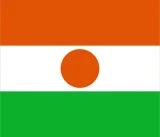
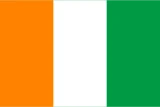
Several flags use orange, white and green. The flag of Niger has the same order of horizontal bands, but it has an orange disc in the center instead of a blue wheel and its proportions are 6:7. The flag of Ireland uses green, white and orange in vertical bands. The flag of Ivory Coast is the Irish flag reversed.
India flag facts
| Country | Republic of India |
|---|---|
| Flag adopted | July 22, 1947 |
| Proportions | 2:3 |
| Colors | #FF6820, #046A38, #FFFFFF |
| Symbols | Ashoka Chakra |
| Flag emoji | 🇮🇳 |
| Country code | IN, IND (ISO 3166) |
| Capital | New Delhi |
| Continent | Asia |
| Population | 1,326,093,247 |
| Area | 3,287,263 km² |
| Currency | Indian rupee |
| National anthem | Jana Gana Mana |
India flag: frequently asked questions
What do Indians call their flag?
The flag is called the Tiranga, a Hindi word meaning "tricolor". Officially it is the national flag of India.
Who designed the Indian flag?
The tricolor design is credited to Pingali Venkayya, who was commissioned by Mahatma Gandhi in 1921 to design a flag. The final version with the Ashoka Chakra was approved by the Constituent Assembly on 22 July 1947.
What was India's old flag?
Before 1947 the Indian National Congress used flags with a spinning wheel (charkha) in the center, first in red and green (with white added) in 1921 and then in saffron, white and green, which became the Congress flag in 1931. Under British rule, India was also represented by a red-field flag with the Union Jack and a Star of India.
Can private citizens fly the Tiranga in India?
Yes. Since the Flag Code was amended in 2002 after a Supreme Court case, all citizens may fly the flag on any day, as long as its dignity is safeguarded. It must not touch the ground or water or be used as drapery, and insulting it is punishable by law.
Which country has a tricolour flag like India?
Many countries use tricolors. France, Italy, Germany, Russia, the Netherlands and Mexico are well-known examples. Niger is the closest match to India, with the same orange, white and green bands in the same order.
What does the wheel on the Indian flag mean?
The 24-spoke blue wheel is the Ashoka Chakra, the wheel of the law (dharma). It comes from the Lion Capital of Ashoka; Radhakrishnan described it as the wheel of law, a sign of movement and change.
Which is the correct flag of India?
The correct flag has three equal horizontal bands: saffron on top, white in the middle and India green at the bottom, with a navy blue 24-spoke Ashoka Chakra in the center of the white band. The Constituent Assembly approved it on 22 July 1947, and it became the flag of the Union of India on 15 August 1947.
Why are the Irish and Indian flag similar?
They share green, white and orange but have separate histories. Ireland's flag is vertical green, white and orange, symbolizing Catholics and Protestants. India's is horizontal saffron, white and green with the Ashoka Chakra, and descends from the Congress flag of Gandhi's time. See the flag of Ireland.
What does saffron stand for on the Indian flag?
In Sarvepalli Radhakrishnan's widely quoted reading, saffron stands for renunciation or disinterestedness: leaders should be indifferent to material gains and dedicate themselves to their work. The saffron is the top band of the flag, and the meaning of the Indian flag colors is a traditional reading, not part of the law.