Asia · PH / PHL
Flag of the Philippines
The Philippines flag has a blue stripe over a red stripe and a white triangle at the hoist holding a golden sun with eight rays and a star at each point. It is the only national flag that is flown with the red stripe on top in wartime.
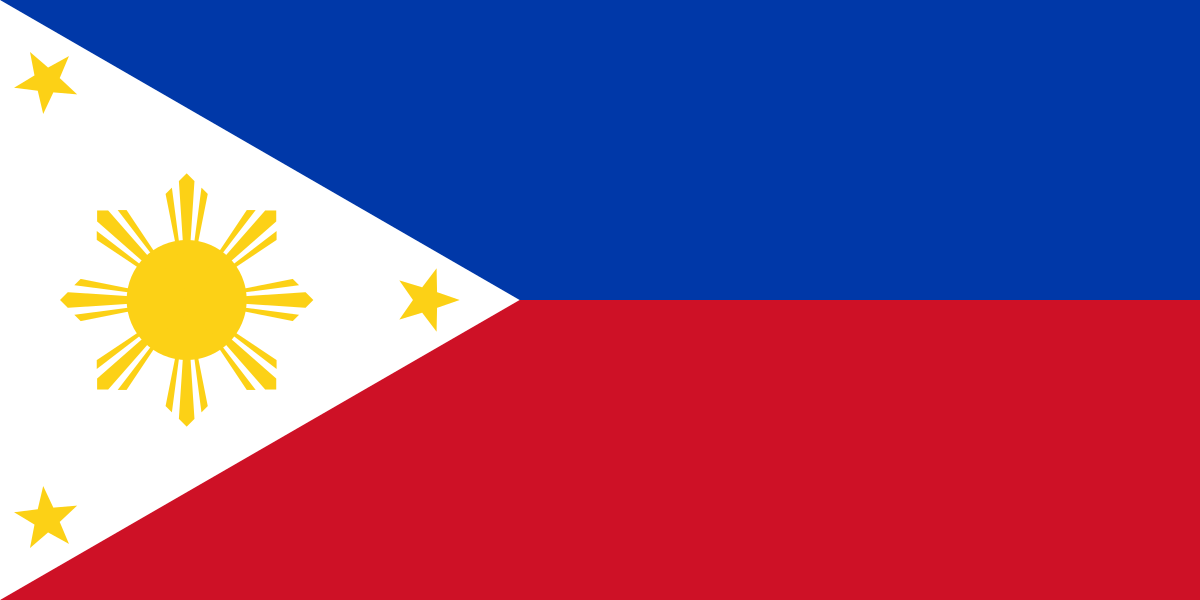
What the flag of the Philippines looks like
The flag of the Philippines is a horizontal bicolor of royal blue over scarlet red, with a white equilateral triangle on the hoist side (the left, nearest the pole). The ratio is 1:2, so the flag is twice as long as it is tall.
Inside the triangle are two kinds of golden-yellow symbols. In the center is a sun with eight primary rays. A small five-pointed star sits at each of the three corners of the triangle. The sun and stars are all in the same gold shade.
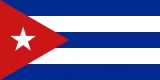
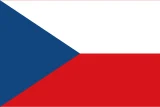
The flag is easy to mix up with a few others that also have a triangle at the hoist, such as the flags of Cuba and the Czech Republic. The Philippine flag is set apart by the golden sun and three stars inside the triangle.
You can see how it appears as an emoji on the Philippines flag emoji page.
Philippines flag colors
Color codes measured from the official design. Use HEX for the web and CMYK for print.
HEX
#0038A8RGB
0, 56, 168CMYK
100, 67, 0, 34HEX
#CE1126RGB
206, 17, 38CMYK
0, 92, 82, 19HEX
#FFFFFFRGB
255, 255, 255CMYK
0, 0, 0, 0HEX
#FCD116RGB
252, 209, 22CMYK
0, 17, 91, 1Philippine flag meaning and symbolism
According to the official description, the white triangle stands for liberty, equality and fraternity. The blue stripe stands for peace, truth and justice, and the red stripe for patriotism and valor.
The golden sun symbolizes unity, freedom, people's democracy and sovereignty, and its eight rays represent eight provinces that took a leading part in the 1896 revolution against Spain. Sources differ on which: one list is Bulacan, Cavite, Pampanga, Laguna, Batangas, Tarlac and Nueva Ecija plus the district of Morong, while research by Ambeth Ocampo names the first eight provinces placed under martial law (Batangas, Bulacan, Cavite, Manila, Laguna, Nueva Ecija, Pampanga and Tarlac). The three stars stand for the three main island groups of the country: Luzon, the Visayas (originally Panay) and Mindanao.
One feature is unique to this flag. In peacetime the blue stripe is flown at the top. In a state of war, the flag is hung with the red stripe on top. This is what makes the flag special among national flags: it is the only official country flag that can be flipped when the country is at war.
History of the Philippine flag
The first revolutionary banners were made by the Katipunan, the secret society that began the revolt against Spain in 1896. The first Katipunan flag was red with three white Ks. The national flag was designed by Emilio Aguinaldo and sewn by Marcela Mariño Agoncillo, her daughter Lorenza and Delfina Herbosa Natividad.
The flag was first displayed at the Battle of Alapan on 28 May 1898 and was formally unfurled on 12 June 1898 in Kawit, Cavite, when Aguinaldo proclaimed independence from Spain. That date is still celebrated as Independence Day, even though the country did not become independent from the United States until 4 July 1946.
Under American rule, displaying the flag was banned by the Flag Act of 1907, which was repealed on 24 October 1919. The shade of blue has varied over time: the colors were first standardized in 1955, a 1985 order to restore the original color was rescinded after the 1986 People Power Revolution, and Royal Blue was designated in the Flag and Heraldic Code of the Philippines (Republic Act 8491), signed in 1998.
National Flag Day is 28 May and Independence Day is 12 June, and in recent years flag days have been extended from 28 May to 30 June.
Interesting facts about the Philippine flag
- The flag is the only one in the world whose display position changes when the country is at war.
- The triangle was a Katipunan symbol and was kept in the national flag.
- A bill to add a ninth ray to the sun, for example to represent Filipino Muslims, was approved by Congress in 2009 but vetoed by President Arroyo.
Philippines flag facts
| Country | Republic of the Philippines |
|---|---|
| Flag adopted | June 12, 1898 |
| Proportions | 1:2 |
| Colors | #0038A8, #CE1126, #FFFFFF, #FCD116 |
| Symbols | Sun, equilateral triangle, five-pointed star |
| Flag emoji | 🇵🇭 |
| Country code | PH, PHL (ISO 3166) |
| Capital | Manila |
| Continent | Asia |
| Population | 112,729,484 |
| Area | 343,448 km² |
| Currency | Philippine peso |
| National anthem | Lupang Hinirang |
Philippines flag: frequently asked questions
What does the Philippine flag represent?
The white triangle stands for liberty, equality and fraternity, blue for peace, truth and justice, and red for patriotism and valor. The sun symbolizes unity, freedom, people's democracy and sovereignty, and its eight rays stand for the eight provinces that rebelled against Spain. The three stars stand for Luzon, the Visayas and Mindanao.
Why are there three stars on the Philippine flag?
The three stars stand for the three major island groups of the country: Luzon in the north, the Visayas in the center and Mindanao in the south.
What is the original Philippine flag?
The first national flag was displayed at Alapan on 28 May 1898 and unfurled at Kawit, Cavite, on 12 June 1898. It had the same layout as today's flag, though the sun originally had a face, which was removed in 1936. Before that, the Katipunan revolutionaries used red flags with white symbols.
Why is the Philippine flag the most unique flag?
It is the only national flag that is turned over in wartime. The blue stripe is normally on top, and in a state of war the red stripe is flown on top.
What are the symbols of the Philippine flag?
The main symbols are the white triangle, the golden sun with eight rays, three five-pointed stars, the blue stripe and the red stripe. Together they stand for equality, liberty, the country's regions and the ideals of the revolution.
What do the 8 rays on the Philippine flag represent?
The eight primary rays of the golden sun stand for the eight provinces that rebelled against Spain in the 1896 revolution. Sources differ on the exact list. One common list is Manila, Bulacan, Cavite, Pampanga, Tarlac, Laguna, Batangas and Nueva Ecija, the first provinces placed under martial law.
What is the deeper meaning of the Philippine flag?
Officially, the white triangle stands for liberty, equality and fraternity, blue for peace, truth and justice, and red for patriotism and valor. The 1898 independence proclamation read it differently: the triangle was the emblem of the Katipunan, and the colors honored the American flag in gratitude for US help against Spain.