North America · CU / CUB
Flag of Cuba
The Cuban flag has five horizontal stripes, three blue and two white, and a red equilateral triangle at the hoist holding a white five-pointed star. Designed in 1849 and nicknamed La Estrella Solitaria, the Lone Star, it became the national flag in 1902.
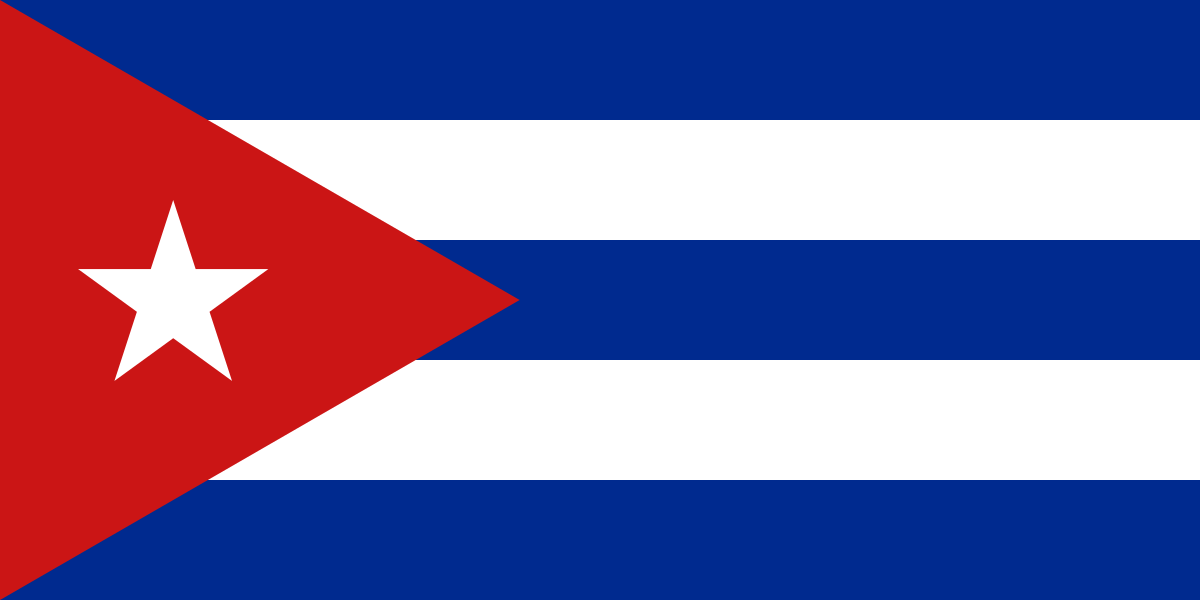
What the flag of Cuba looks like
The flag of Cuba is made of five horizontal stripes of equal height, alternating blue and white, with blue at the top and bottom. At the hoist is a red equilateral triangle, and in the center of it there is a white five-pointed star with one point facing upward. The proportions are 1:2, wider than most flags.
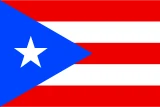
The flag is often placed side by side with the flag of Puerto Rico, since the two have the same pieces in swapped colors: Cuba has blue stripes and a red triangle, while Puerto Rico has red stripes and a blue triangle. For the emoji, see the Cuba flag emoji page.
Cuba flag colors
Color codes measured from the official design. Use HEX for the web and CMYK for print.
HEX
#002A8FRGB
0, 42, 143CMYK
100, 71, 0, 44HEX
#FFFFFFRGB
255, 255, 255CMYK
0, 0, 0, 0HEX
#CB1515RGB
203, 21, 21CMYK
0, 90, 90, 20Cuba flag meaning and symbolism
The standard explanation says that the three blue stripes stand for the three departments into which Cuba was divided in the 19th century: Occidental, Central and Oriental. The two white stripes represent the purity of the independence cause. The red triangle is described as a symbol of strength and constancy and of Masonic influence, since the triangle is a Masonic symbol of equality and appears in other flags of the former Spanish empire. It is also commonly read as the blood shed in the struggle for freedom.
The white star stands for the independence and absolute freedom of the island, which is why the flag is called the Lone Star.
History of the Cuban flag
The flag was designed in 1849 by the poet Miguel Teurbe Tolón together with Narciso López, a Venezuelan-born general who wanted to free Cuba from Spain, and the first flag was sewn by Teurbe Tolón's wife, Emilia. In May 1850 López's rebels took the coastal town of Cárdenas and raised it there for the first time. His expeditions failed, and he was executed in 1851.
During the Ten Years' War (1868-78) Carlos Manuel de Céspedes raised another flag at La Demajagua, his sugar estate, but the assembly of the rebels in 1869 chose the design of López as the flag of the Republic in Arms.
After the United States occupied the island, the Republic of Cuba was established on 20 May 1902, and the flag was officially raised. Its specifications were formally set by decree in 1906, and it has not changed since, even after the revolution of 1959; the current Cuban state, a one-party socialist republic led by the Communist Party, still uses the same flag.
Cuba and Puerto Rico flags
The Puerto Rican flag was created in 1895 by exiles from the independence movement, who were allied with Cuban rebels. They reversed the colors of the Cuban flag to show a bond between the two islands. This is why people often ask whether Puerto Rico copied Cuba's flag, and the answer is that the similarity was deliberate.
Cuba flag facts
| Country | Republic of Cuba |
|---|---|
| Flag adopted | May 20, 1902 |
| Proportions | 1:2 |
| Colors | #002A8F, #FFFFFF, #CB1515 |
| Symbols | equilateral triangle, five-pointed star |
| Flag emoji | 🇨🇺 |
| Country code | CU, CUB (ISO 3166) |
| Capital | Havana |
| Continent | North America |
| Population | 10,985,974 |
| Area | 109,884 km² |
| Currency | Cuban peso |
| National anthem | El Himno de Bayamo |
Cuba flag: frequently asked questions
What does the Cuban flag symbolize?
The three blue stripes stand for the three departments into which the island was divided at the time, the white stripes for the purity of the patriot cause, and the red triangle for strength and constancy. The white star is traditionally read as Cuba's freedom.
What was Cuba's original flag?
Before the republic, Cuba was under Spain's flag. The independence flag of 1849, created for Narciso López, is the one that became the national flag in 1902.
What is the difference between the Cuban flag and the Puerto Rico flag?
The two flags have the same layout with the colors swapped. Cuba has three blue and two white stripes with a red triangle, while Puerto Rico has red and white stripes with a blue triangle. Cuba's flag was designed in 1849, and Puerto Rico's was adopted in 1895 using it as the model, so the Cuban flag and the Puerto Rican flag are closely linked.
Why does the Cuban flag have one star?
The flag is called the Estrella Solitaria, or Lone Star flag, after its single white five-pointed star inside the red triangle. It was designed in 1849 by Miguel Teurbe Tolón together with Narciso López, and the star is traditionally read as a symbol of Cuban freedom and independence.