Europe · LU / LUX
Flag of Luxembourg
The Luxembourg flag is a horizontal tricolor of red, white and light blue. It looks like the Dutch flag but is longer, and its light blue and red are lighter shades. The colors come from the coat of arms of the House of Luxembourg.

What the flag of Luxembourg looks like
The flag of Luxembourg has three horizontal stripes of equal height: red at the top, white in the middle and light blue at the bottom. The proportions can be 2:1 or 5:3 (width to height), which makes it longer than the Dutch flag. The red is a watermelon red and the blue is a bright light blue, both lighter than the shades used in the Netherlands.
There is no emblem on the national flag. It is shown in small form in the Luxembourg flag emoji.
Luxembourg flag colors
Color codes measured from the official design. Use HEX for the web and CMYK for print.
HEX
#EF3340RGB
239, 51, 64CMYK
0, 79, 73, 6HEX
#FFFFFFRGB
255, 255, 255CMYK
0, 0, 0, 0HEX
#00A3E0RGB
0, 163, 224CMYK
100, 27, 0, 12Luxembourg flag meaning and symbolism
The colors were derived from the coat of arms of the House of Luxembourg, and probably from the arms of the County and later Duchy of Luxembourg, which combined the lion of the dukes of Limbourg with the supposed striped banner of the early counts of Luxembourg. That shield shows a red lion with a forked tail, a crown and a yellow tongue and claws on a field of ten white and blue stripes. Red, white and blue are the colors of the lion and the stripes.
History of the Luxembourg flag
Luxembourg was a county, then a duchy, within the Holy Roman Empire, and later passed through Burgundian, Spanish, French and Austrian rule. After the defeat of Napoleon in 1815 it became a Grand Duchy, and its ruler was the King of the Netherlands, William I, who held the title of Grand Duke. The Dutch connection is one reason why the flags look alike. After the Belgian Revolution of 1830, its western part went to Belgium under a settlement of 1839, and the rest became fully independent, with the Dutch king as Grand Duke until 1890.
The colors were first adopted around 1830, during the Belgian Revolution, when patriots were urged to display the national colors. The horizontal red, white and blue design was fixed on 12 June 1845, and the flag was defined as a tricolor in 1848. It took until 1993 for a law to regulate the flag, amending the 1972 law on national emblems. That law defined the blue as a bright blue, in contrast to the Dutch flag.
Luxembourg flag vs Dutch flag
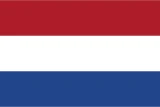
The two flags use the same color order, but the details are different. The Netherlands flag is less oblong, with a darker red and darker blue, while the Luxembourg flag is longer, with a lighter red and a bright light blue. The Dutch flag was originally orange, white and blue, and the orange was replaced by red in the 17th century. The Luxembourg tricolor has its own heraldic origin, even though it is close in appearance.
Luxembourg also has a second flag, the Roude Léiw (Red Lion). It shows the red lion of the national arms on ten blue and white stripes, and it is the official ensign for ships and aircraft registered in Luxembourg. Since 2007 it is also accepted as a civil flag within the Grand Duchy, and supporters widely use it at sporting events. It is not the main national flag, which is the plain tricolor.
Luxembourg flag facts
| Country | Grand Duchy of Luxembourg |
|---|---|
| Flag adopted | 1993 |
| Proportions | 3:5 |
| Colors | #EF3340, #FFFFFF, #00A3E0 |
| Flag emoji | 🇱🇺 |
| Country code | LU, LUX (ISO 3166) |
| Capital | Luxembourg |
| Continent | Europe |
| Population | 690,959 |
| Area | 2,593 km² |
| National anthem | Ons Heemecht |
Luxembourg flag: frequently asked questions
Why is the Luxembourg flag similar to the Netherlands?
Both are red, white and blue horizontal tricolors. The Dutch flag grew out of the Dutch Revolt, while Luxembourg took its colors from the arms of the Grand Duchy. The two countries were also ruled by the same monarch from 1815 to 1890.
What is the difference between the Dutch and Luxembourg flag?
The Luxembourg flag is longer, and its blue and red are lighter shades. The Dutch flag uses a darker blue and red.
Why does Luxembourg have two flags?
The national flag is the plain red, white and blue tricolor. The second flag, the Red Lion, shows the lion from the coat of arms on striped white and blue and is the official ensign for ships and aircraft.
What country did Luxembourg used to be part of?
Luxembourg has been part of the Holy Roman Empire, the Spanish and Austrian Netherlands, France and the United Kingdom of the Netherlands before becoming fully independent in the 19th century.
Why did the Luxembourg flag change?
The tricolor itself has been in use since the mid-19th century, and its design was fixed in 1845. It was not regulated by law until 1993, which defined the blue as a bright blue.
What do the colors of the Luxembourg flag mean?
The colors have no official meaning on their own. They come from the coat of arms of the House of Luxembourg, which has a red lion on a field of white and blue stripes. The colors were first used around 1830, and the design was fixed on 12 June 1845.
How is the Luxembourg flag different from the French flag?
Luxembourg's flag has horizontal stripes of red, white and light blue, from top to bottom. The French flag has vertical stripes of blue, white and red. Luxembourg's design is closer to the Dutch flag, though it is longer and lighter.
What is the Luxembourg flag called in Luxembourgish?
It is informally called Rout-Wäiss-Blo, meaning "Red-White-Blue". The red lion flag is known as Roude Léiw. The tricolor is the official national flag, while the Red Lion is the ensign for ships and aircraft registered in Luxembourg.