North America · PR / PRI
Flag of Puerto Rico
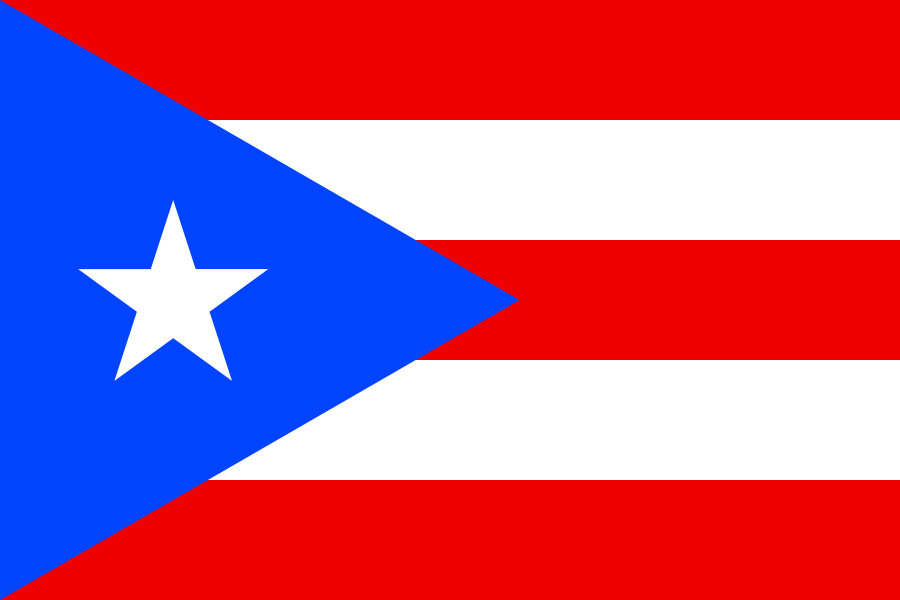
The Puerto Rico flag has five horizontal stripes, three red and two white, and a blue triangle at the hoist with a white star. It was adopted in 1895 by Puerto Rican revolutionaries in exile in New York and became the official flag in 1952.
What the flag of Puerto Rico looks like
The flag of Puerto Rico consists of five horizontal stripes of equal height: red at the top and bottom, with white stripes alternating between them. At the hoist there is an equilateral blue triangle that extends from the hoist into the stripes, and inside it sits a single white five-pointed star. The proportions are not set by law, but the flag is most often drawn at 2:3.
No official shade of blue has ever been set by law. Since 1952 the government has used a dark navy blue, close to that of the American flag, while a medium blue has been the most common shade among the public since the 1990s. Supporters of independence use a light sky blue, so the shade is sometimes read as a sign of political preference.
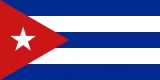
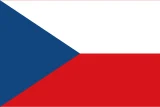
The flag is easily confused with the flag of Cuba, which is its color-inverted counterpart: the Cuban flag has blue and white stripes and a red triangle. The design is also close to that of the Czech Republic, which has a white and red field with a blue triangle but no star or stripes.
Puerto Rico flag colors
Color codes measured from the official design. Use HEX for the web and CMYK for print.
HEX
#EE0000RGB
238, 0, 0CMYK
0, 100, 100, 7HEX
#FFFFFFRGB
255, 255, 255CMYK
0, 0, 0, 0HEX
#0044FFRGB
0, 68, 255CMYK
100, 73, 0, 0Puerto Rico flag meaning and symbolism
The meaning that is usually given today is that the red stripes stand for the blood of the brave warriors, the white stripes for liberty, victory and peace, the blue triangle for the sky and the surrounding sea, and the three sides of the triangle for the three branches of government: executive, legislative and judicial. The single white star stands for the archipelago and island of Puerto Rico.
The original 1895 design was a statement about independence from Spain, and it was the Cuban flag with its colors inverted, a sign that fighters on both islands saw their struggle as shared. Under US rule the flag was banned for decades. After 1952 it became the flag of the Commonwealth, and for many people it now stands for Puerto Rican identity as a whole.
History of the Puerto Rican flag
Before the current flag, Puerto Rico used the flags of Spain, which ruled the island for about four centuries. A separatist banner was raised in the 1868 uprising known as the Grito de Lares, but the flag known today was created in 1895, when the Puerto Rican section of the Cuban Revolutionary Party met in New York City. The group, which supported independence for both islands, chose a design that reversed the colors of Cuba's flag. Who designed it is disputed: Francisco Gonzalo Marín Shaw and Antonio Vélez Alvarado are the two names most often credited.
Spain gave up the island after the Spanish-American War of 1898, and Puerto Rico came under the United States. Flying the Puerto Rican flag was restricted for decades, and under the 1948 Law 53, known as the Gag Law, it was a crime to display it. The law was repealed in 1957. In the meantime the flag was adopted as the official flag of the new Commonwealth in July 1952; the law named the colors as red, white and blue without fixing a shade, and the government used a dark blue.
In 2016, after Congress passed the PROMESA act that set up a fiscal oversight board for the island, many protesters began to use a version of the flag in black and white. The black version was meant to show the flag in mourning, and it became a symbol of resistance and protest against the oversight board and austerity.
Why Puerto Rico has two flags
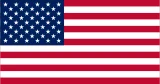
Puerto Rico is an unincorporated territory of the United States with a self-governing status called a commonwealth. Its people are US citizens, and the American flag flies alongside the island's own. The Puerto Rican flag is the local flag, not the flag of a sovereign state, which is why you will often see both together. Puerto Rico also sends its own athletes to the Olympic Games under its own flag.
See also the Puerto Rico flag emoji page, or the flag of the United States.
Puerto Rico flag facts
| Country | Commonwealth of Puerto Rico |
|---|---|
| Flag adopted | July 25, 1952 |
| Proportions | 2:3 |
| Colors | #EE0000, #FFFFFF, #0044FF |
| Symbols | five-pointed star, isosceles triangle |
| Flag emoji | 🇵🇷 |
| Country code | PR, PRI (ISO 3166) |
| Capital | San Juan |
| Continent | North America |
| Population | 3,285,874 |
| Area | 9,104 km² |
| Currency | United States dollar |
| National anthem | La Borinqueña |
Puerto Rico flag: frequently asked questions
Why does Puerto Rico have two flags?
Puerto Rico is a US territory, so the American flag flies there, and the Puerto Rican flag is the island's own flag, official since 1952. Both are flown, usually side by side.
Why are the Cuban and Puerto Rican flags so similar?
Puerto Rican and Cuban independence activists worked together in the 1890s, and the Puerto Rican flag was designed in 1895 with the colors of Cuba's flag reversed. It was meant to show they shared a struggle against Spain.
Is Puerto Rico a country or part of the US?
It is an unincorporated territory of the United States with commonwealth status. It has its own government and flag, but it is not an independent country, and its residents are US citizens.
Why did they change the original Puerto Rican flag?
The earlier revolutionary banner, the Lares flag of 1868, was replaced in December 1895 by committee members and Cuban rebels exiled in New York. They chose a design based on the Cuban flag to show the bond between the two independence struggles against Spain.
What's the difference between the Puerto Rican flag and the Cuban flag?
The colors are swapped. Puerto Rico has three red and two white stripes with a blue triangle, while Cuba has three blue and two white stripes with a red triangle. Both show one white star inside the triangle.