Europe · AX / ALA
Flag of Åland
The Åland flag is blue with a red Nordic cross edged in yellow. It joins the blue and yellow of Sweden with a red cross, and it is flown by the Swedish-speaking, demilitarized islands in the Baltic Sea.
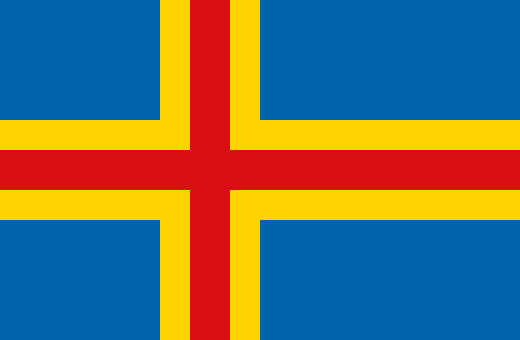
What the flag of Åland looks like
The Åland flag is a blue rectangle with a Nordic cross: a red cross with a yellow border. The vertical bar of the cross is set toward the hoist, and both arms stretch to the edges. The proportions are 17:26.
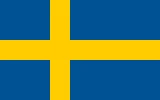
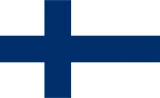
The flag is easy to separate from its neighbors. The Swedish flag is blue with a plain yellow cross, and the Finnish flag is white with a blue cross. The Åland flag has both Swedish colors and a red cross on top. The Åland flag emoji shows the same layout.
Åland Islands flag colors
Color codes measured from the official design. Use HEX for the web and CMYK for print.
HEX
#0064ADRGB
0, 100, 173CMYK
100, 42, 0, 32HEX
#FFD300RGB
255, 211, 0CMYK
0, 17, 100, 0HEX
#DA0E15RGB
218, 14, 21CMYK
0, 94, 90, 15Åland flag meaning and symbolism
The blue and yellow reflect the islands' cultural and historical ties to Sweden, and the language there is still Swedish. The red cross stands for Finland, which holds sovereignty over the islands, so the flag can be read as the Swedish flag with a red cross added. The yellow edge around the cross is called a fimbriation.
History of the Åland flag
Åland was part of Sweden until 1809, when it passed to Russia with the rest of Finland. After Finland became independent in 1917, most islanders wanted to be reunited with Sweden. The dispute was settled by the League of Nations in 1921: the islands stayed Finnish but received guaranteed autonomy, with Swedish as the official language. The islands had already been demilitarized since 1856, and that status was confirmed.
During the early 1920s the islands unofficially used a blue and yellow tricolor, which Finland banned in 1935. Legislation in 1952 gave Åland the right to have its own flag. A first proposal resembling the Swedish flag with a blue cross was rejected by President Paasikivi, and the final design with the red cross was adopted in 1954. It was first hoisted in Mariehamn on 3 April 1954, and the last Sunday of April is observed as flag day. Åland also has its own parliament and stamps, and celebrates Autonomy Day on 9 June.
Åland Islands flag facts
| Country | Åland Islands |
|---|---|
| Flag adopted | April 3, 1954 |
| Proportions | 17:26 |
| Colors | #0064AD, #FFD300, #DA0E15 |
| Symbols | Nordic cross |
| Flag emoji | 🇦🇽 |
| Country code | AX, ALA (ISO 3166) |
| Capital | Mariehamn |
| Continent | Europe |
| Population | 30,836 |
| Area | 1,583 km² |
| National anthem | Ålänningens sång |
Åland Islands flag: frequently asked questions
Is Åland its own country?
No. Åland is an autonomous, demilitarized region of Finland. It has its own parliament, flag and stamps, but Finland handles foreign policy and defense.
Why is Åland not Swedish?
After Finland became independent, the League of Nations decided in 1921 that the islands should stay with Finland, with a guarantee of Swedish language and culture and a wide degree of autonomy.
How is the Åland flag different?
It is blue with a red cross bordered in yellow. The Swedish flag has a plain yellow cross, while the Finnish flag is white with a blue cross.
How do you pronounce Åland?
It is pronounced roughly "OH-land" in English. The Swedish name is spelled with the letter Å, which sounds like the vowel in "law".