North America · TC / TCA
Flag of the Turks and Caicos Islands
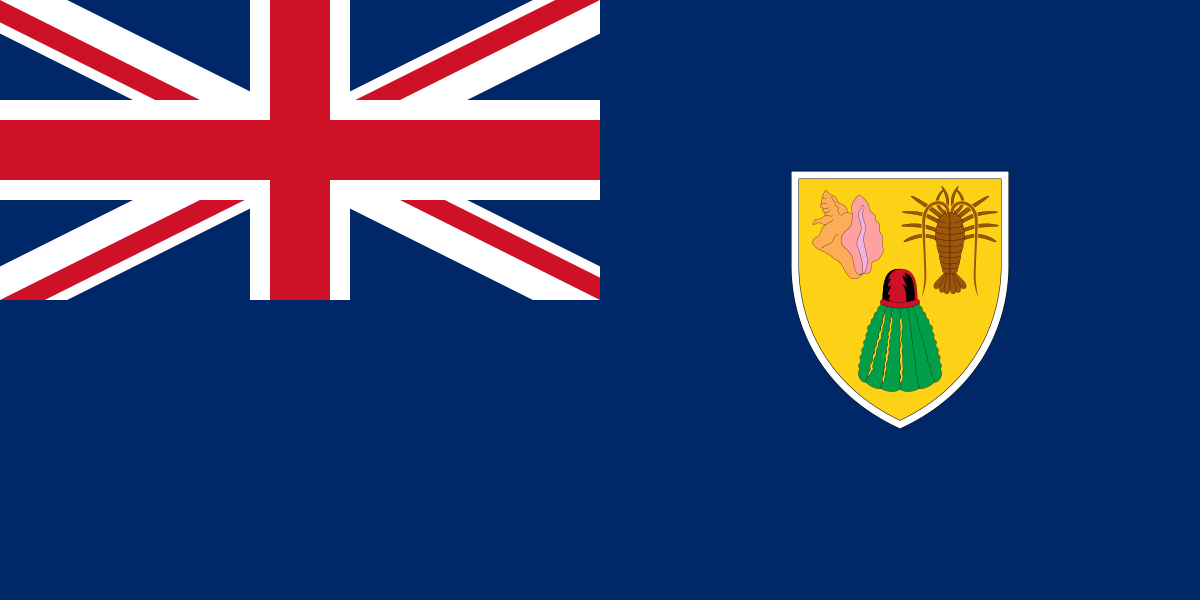
The Turks and Caicos Islands flag is a Blue Ensign with the Union Jack in the corner and the territory's shield in the fly. The shield shows a conch shell, a spiny lobster and a Turk's head cactus, which stand for the islands' sea life and plants.
What the flag of the Turks and Caicos Islands looks like
The flag has a dark blue field in a 1:2 ratio, and a Union Jack in the upper hoist corner. In the fly is the coat of arms, shown as a yellow shield.
Three emblems are painted on the shield. A conch shell is at the top left, a spiny lobster at the top right, and a Turk's head cactus in the lower half. These are the three symbols most often meant when people ask about the three symbols on the flag.
Turks & Caicos Islands flag colors
Color codes measured from the official design. Use HEX for the web and CMYK for print.
HEX
#002868RGB
0, 40, 104CMYK
100, 62, 0, 59HEX
#CE1126RGB
206, 17, 38CMYK
0, 92, 82, 19HEX
#FFFFFFRGB
255, 255, 255CMYK
0, 0, 0, 0HEX
#FCD116RGB
252, 209, 22CMYK
0, 17, 91, 1Turks and Caicos Islands flag meaning and symbolism
The three emblems are chosen from the islands' economy and nature. The conch and the lobster are the two main products of the local fishing industry, and are also important in Caribbean cooking. The cactus, which looks like a Turkish fez, gave the islands the first half of their name.
The Blue Ensign and the Union Jack show the link with the United Kingdom, because the islands are a British Overseas Territory. Older badges referred to the salt industry, which was the main source of income for the islands in the 18th and 19th centuries.
History of the Turks and Caicos Islands flag
The islands were a dependency of Jamaica until 1959, when they became a separate colony. The governor of Jamaica remained their governor until 1962. From 1965 to 1973 the administrator answered to the governor of the Bahamas, and when the Bahamas became independent in 1973 the post became that of governor.
The present flag was adopted on 7 November 1968. The coat of arms on it was granted on 28 September 1965. The flag before 1968 was also a defaced Blue Ensign, in use since 1875, with an older badge showing a ship, a beach and salt piles. In 1999 the flag was modified: a white outline was added to the shield and the badge was enlarged to about half the hoist width. The territory remains a British Overseas Territory with its own premier and parliament. The nearby flag of the Bahamas looks quite different, as the Bahamas became independent in 1973.
Turks & Caicos Islands flag facts
| Country | Turks and Caicos Islands |
|---|---|
| Flag adopted | November 7, 1968 |
| Proportions | 1:2 |
| Colors | #002868, #CE1126, #FFFFFF, #FCD116 |
| Symbols | Coat of arms of the Turks and Caicos Islands, Union Jack |
| Flag emoji | 🇹🇨 |
| Country code | TC, TCA (ISO 3166) |
| Capital | Cockburn Town |
| Continent | North America |
| Population | 44,542 |
| Area | 417 km² |
| Currency | United States dollar |
| National anthem | God Save the King |
Turks & Caicos Islands flag: frequently asked questions
What are the three symbols on the Turks and Caicos flag?
They are a conch shell, a spiny lobster and a Turk's head cactus. They are shown on a yellow shield on the right side of the flag.
Which country do Turks and Caicos belong to?
The islands are a British Overseas Territory. They have their own government, and the United Kingdom is responsible for defense and foreign affairs.
What nationality are you if you're from Turks and Caicos?
People from the islands are called Turks and Caicos Islanders. Many hold British Overseas Territories citizenship, and most can also apply for full British citizenship.
When was the Turks and Caicos flag adopted?
The flag was adopted on 7 November 1968 and modified in 1999.
Is there an igloo on the Turks and Caicos flag?
No. The igloo idea comes from the former coat of arms used on the flag until 1968, which showed salt piles on a beach. Shading added to the piles in the 1889 Admiralty Flag Book made them look like an igloo. The current shield shows a conch, a lobster and a cactus.
What changed on the Turks and Caicos flag in 1999?
The design adopted on 7 November 1968 was modified in 1999. A white outline was added around the yellow shield, and the badge was enlarged so that its height is about half of the flag's hoist width. The flag remains a Blue Ensign with the Union Flag in the canton.
Why are they called the Turks and Caicos Islands?
The first half of the name comes from the Turk's head cactus (Melocactus) on the coat of arms, which looks like a traditional Turkish fez. That cactus is one of the three symbols on the yellow shield on the flag, next to the conch shell and the lobster.