Asia · BT / BTN
Flag of Bhutan
The Bhutan flag is divided diagonally into a yellow upper half and an orange lower half, with a white dragon across the middle. The dragon, called the Druk, gives the country its local name, Druk Yul, "Land of the Thunder Dragon".
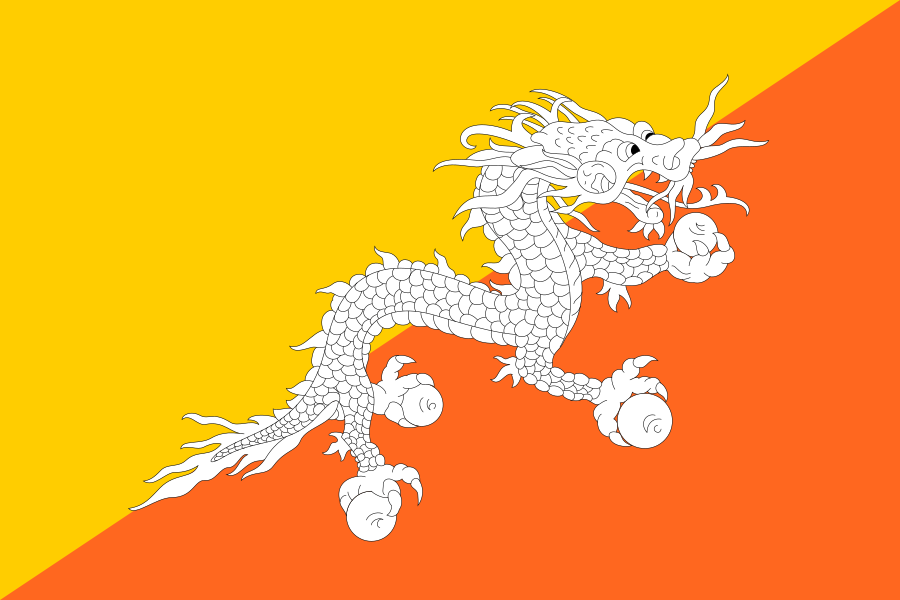
What the flag of Bhutan looks like
The national flag of Bhutan is divided diagonally from the lower hoist-side corner. The upper triangle is yellow and the lower triangle is orange. The proportions are 3:2, width to height.
A large white dragon with black detail runs along the line between the two triangles. It faces away from the hoist, with its head pointing toward the fly. The dragon holds a jewel in each of its claws, and its mouth is open, showing its fangs.
Bhutan's flag is one of the few national flags that show an animal as the main element, and a dragon is its centerpiece. The measured colors on this page include a light grey, which is the shading on the dragon's body and not a separate flag color. A small version is available as the Bhutan flag emoji, and a larger file on the Bhutan flag download page.
Bhutan flag colors
Color codes measured from the official design. Use HEX for the web and CMYK for print.
HEX
#FFCD00RGB
255, 205, 0CMYK
0, 20, 100, 0HEX
#FF671FRGB
255, 103, 31CMYK
0, 60, 88, 0HEX
#FEFEFERGB
254, 254, 254CMYK
0, 0, 0, 0HEX
#E2E2E2RGB
226, 226, 226CMYK
0, 0, 0, 11Bhutan flag meaning and symbolism
Every part of the flag has an accepted meaning that reflects the country's twin traditions of state and Buddhism.
- Yellow: the civil tradition and temporal authority embodied in the king, the Druk Gyalpo, the "Dragon King".
- Orange: the Buddhist spiritual tradition, in particular the Drukpa Kagyu and Nyingma schools.
- The dragon: the name of the country, Druk Yul, "Thunder Dragon Kingdom", and the Drukpa lineage of Tibetan Buddhism. It spreads equally over the line between the colors, which shows the equal importance of civic and monastic traditions.
- White color of the dragon: the purity of inner thoughts and deeds that unite all the ethnically and linguistically diverse peoples of Bhutan.
- The jewels in its claws: the wealth and prosperity of the nation and the protection of its people.
- The snarling mouth: the commitment of Bhutanese deities to the defense of Bhutan.
These meanings come from the flag rules approved by the National Assembly in 1972 and restated in the 2008 Constitution.
History of the Bhutan flag
The basic design of the flag is credited to Mayum Choying Wangmo Dorji in 1947. A first version, with a green dragon on a yellow and red field, was displayed in 1949 at the signing of the Indo-Bhutan Treaty. A second version, with a white dragon, was introduced in 1956 for the visit of the third king, Jigme Dorji Wangchuck, to eastern Bhutan.
From the late 1950s, Dasho Shingkhar Lam was asked by the king to redesign the flag. The proportions were changed to match the Indian flag, which was believed to flutter better, the dragon was moved to spread over the diagonal, and the red half was changed to orange. The flag has been unchanged since 1969, and in 1972 the National Assembly approved rules on its design, sizes and use.
The flag remains in the same form today. It is flown on government buildings and at the district fortress-monasteries known as dzongs, and national rules cover how it must be hung and handled.
About Bhutan
Bhutan is a small kingdom in the eastern Himalayas, between China to the north and India to the south, and its capital is Thimphu. It is a country in South Asia, not Africa, and it is independent, though it has close ties with India. The country is known for measuring its progress with a "Gross National Happiness" index. Compare it with other Asian flags on the flags of Asia page.
Bhutan flag facts
| Country | Kingdom of Bhutan |
|---|---|
| Flag adopted | 1969 |
| Proportions | 2:3 |
| Colors | #FFCD00, #FF671F, #FEFEFE, #E2E2E2 |
| Symbols | Druk |
| Flag emoji | 🇧🇹 |
| Country code | BT, BTN (ISO 3166) |
| Capital | Thimphu |
| Continent | Asia |
| Population | 787,424 |
| Area | 38,394 km² |
| Currency | ngultrum |
| National anthem | Druk Tsenden |
Bhutan flag: frequently asked questions
Why is there a dragon on Bhutan's flag?
Bhutan's name in the local language, Druk Yul, means "Land of the Thunder Dragon". The Druk is the country's national symbol, and it gives the country its name.
What do the colors of the Bhutan flag mean?
Yellow stands for the civil tradition and authority of the king and orange for the Buddhist spiritual tradition. The white dragon stands for the purity of inner thoughts and deeds that unite all peoples of Bhutan.
What do the jewels in the dragon's claws mean?
The jewels stand for the wealth and prosperity of the country and for the protection of its people.
Is Bhutan in Asia or Africa?
Bhutan is in Asia, in the eastern Himalayas of South Asia. It borders China to the north and India on its other sides.
Is Bhutan an Indian territory?
No. Bhutan is an independent kingdom with its own government, king and flag, although it has a close relationship with India and relies on it for trade and some security cooperation.
Which countries have a dragon on the flag?
Bhutan has a dragon on its national flag, and Wales, one of the countries of the United Kingdom, also has a red dragon on its flag.
What was the original Bhutan flag?
The first national flag was introduced in 1949 at the signing of the Indo-Bhutan Treaty, and is credited to Mayum Choying Wangmo Dorji. Reportedly it was split diagonally into yellow and red with a green dragon. The dragon became white in 1956, and the current yellow and orange design dates from 1969.
What shape is the Bhutan flag?
It is a rectangle with a 3:2 ratio, divided diagonally from the lower hoist corner into a yellow upper triangle and an orange lower one. The ratio was chosen to match the flag of India, which Bhutan believed flew better. Standard sizes include 6 ft × 4 ft.