Europe · FO / FRO
Flag of the Faroe Islands
The Faroe Islands flag, called Merkið ("the banner"), is a white field with a red Nordic cross edged in blue. It was designed by Faroese students in 1919 and was recognized by the British in 1940 during the Second World War.
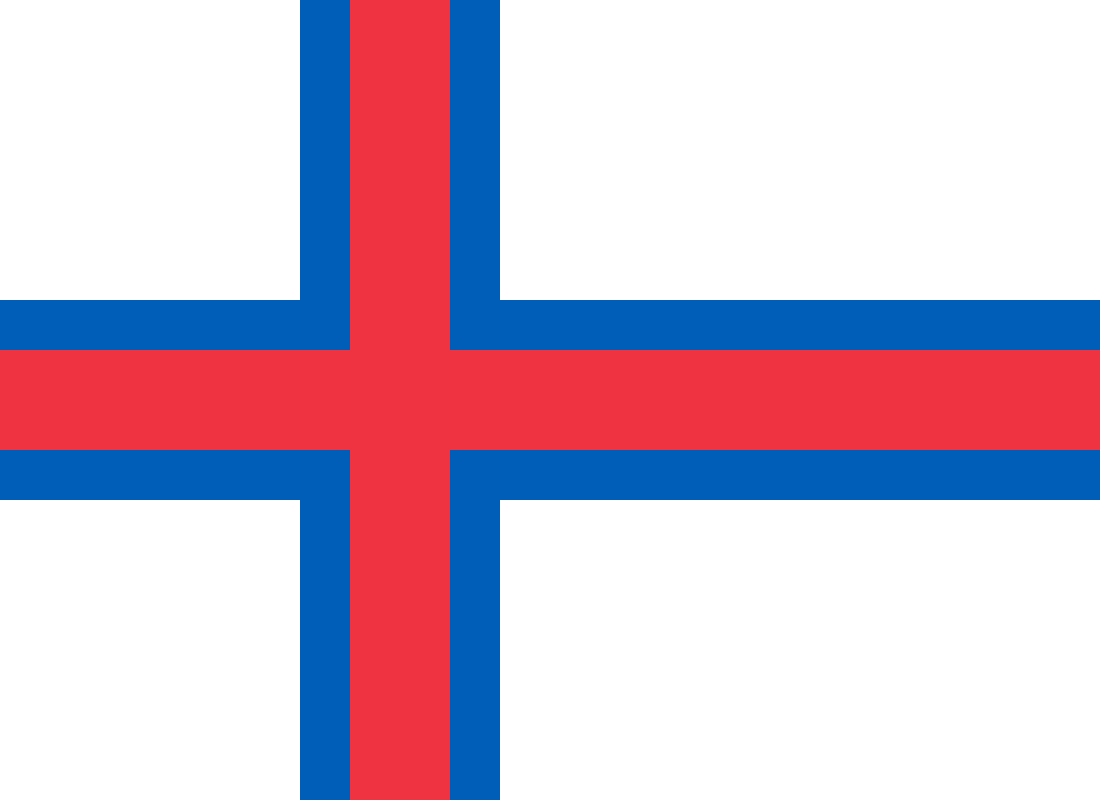
What the flag of the Faroe Islands looks like
The flag is white with an offset cross in the style of the Nordic countries. The vertical bar of the cross sits closer to the hoist (the side by the pole) than to the fly, which is typical of all Nordic flags. The cross is red and is bordered on both sides by a thin blue band, called a fimbriation. The proportions are 8:11.
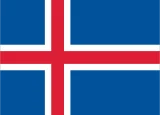
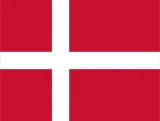
The flag is clearly related to the Danish flag, which has a white cross on red, and to the Icelandic flag, which has a red cross edged in white on blue. The Faroese flag is the only one of the three to have a white field.
Faroe Islands flag colors
Color codes measured from the official design. Use HEX for the web and CMYK for print.
HEX
#FFFFFFRGB
255, 255, 255CMYK
0, 0, 0, 0HEX
#EF3340RGB
239, 51, 64CMYK
0, 79, 73, 6HEX
#005EB8RGB
0, 94, 184CMYK
100, 49, 0, 28Faroe Islands flag meaning and symbolism
The cross represents Christianity, as it does on all Nordic flags. The colors are often explained with reference to Faroese nature and Nordic ties: white is commonly linked to sea foam and the bright sky, while red and blue appear in traditional Faroese dress and echo the colors of other Nordic flags. These readings are traditional and not defined by law.
History of the Faroe Islands flag
The modern flag was designed in 1919 by Faroese students studying in Copenhagen, led by Jens Oliver Lisberg and including Janus Øssursson and Paul Dahl. It was first hoisted in the Faroes at Fámjin on 22 June 1919.
That changed in the Second World War. Germany occupied Denmark in April 1940, and British forces occupied the Faroes. Because Faroese vessels needed to be told apart from Danish ships, the British authorities recognized the Merkið for Faroese shipping on 25 April 1940. That day is now celebrated as Flaggdagur (Flag Day).
In 1948 the home-rule settlement formally recognized a special Faroese flag and set rules for its use within Faroese self-government. You can see it on the flag emoji and compare it with other Nordic flags, for example the Danish flag or the Icelandic flag.
Faroe Islands flag facts
| Country | Faroe Islands |
|---|---|
| Flag adopted | 1948 |
| Proportions | 8:11 |
| Colors | #FFFFFF, #EF3340, #005EB8 |
| Symbols | Nordic cross |
| Flag emoji | 🇫🇴 |
| Country code | FO, FRO (ISO 3166) |
| Capital | Tórshavn |
| Continent | Europe |
| Population | 54,149 |
| Area | 1,399 km² |
| Currency | Faroese króna |
| National anthem | Tú alfagra land mítt |
Faroe Islands flag: frequently asked questions
Are the Faroe Islands a country?
The Faroe Islands are a self-governing nation within the Kingdom of Denmark. They run their own affairs, with their own parliament and flag, while Denmark is responsible for defense and foreign policy in most areas.
Are the Faroe Islands British or Danish?
They are Danish, not British. The British occupied them during the Second World War, from 1940 to 1945, but they were returned to Danish rule.
Why are the Faroe Islands not a country?
They have not declared independence. The islands chose self-government in 1948 and a wider home rule later, and debate on full independence continues among the Faroese.
What flag is 🇫🇴?
🇫🇴 is the flag emoji of the Faroe Islands, made from the regional indicator letters F and O. It shows Merkið, the white flag with a red Nordic cross edged in blue. You can copy it on the Faroe Islands flag emoji page.