North America · BB / BRB
Flag of Barbados
The Barbados flag has three vertical bands of ultramarine, gold and ultramarine, with the head of a black trident in the center of the gold band. The trident is broken, which is said to show the break from British colonial rule.
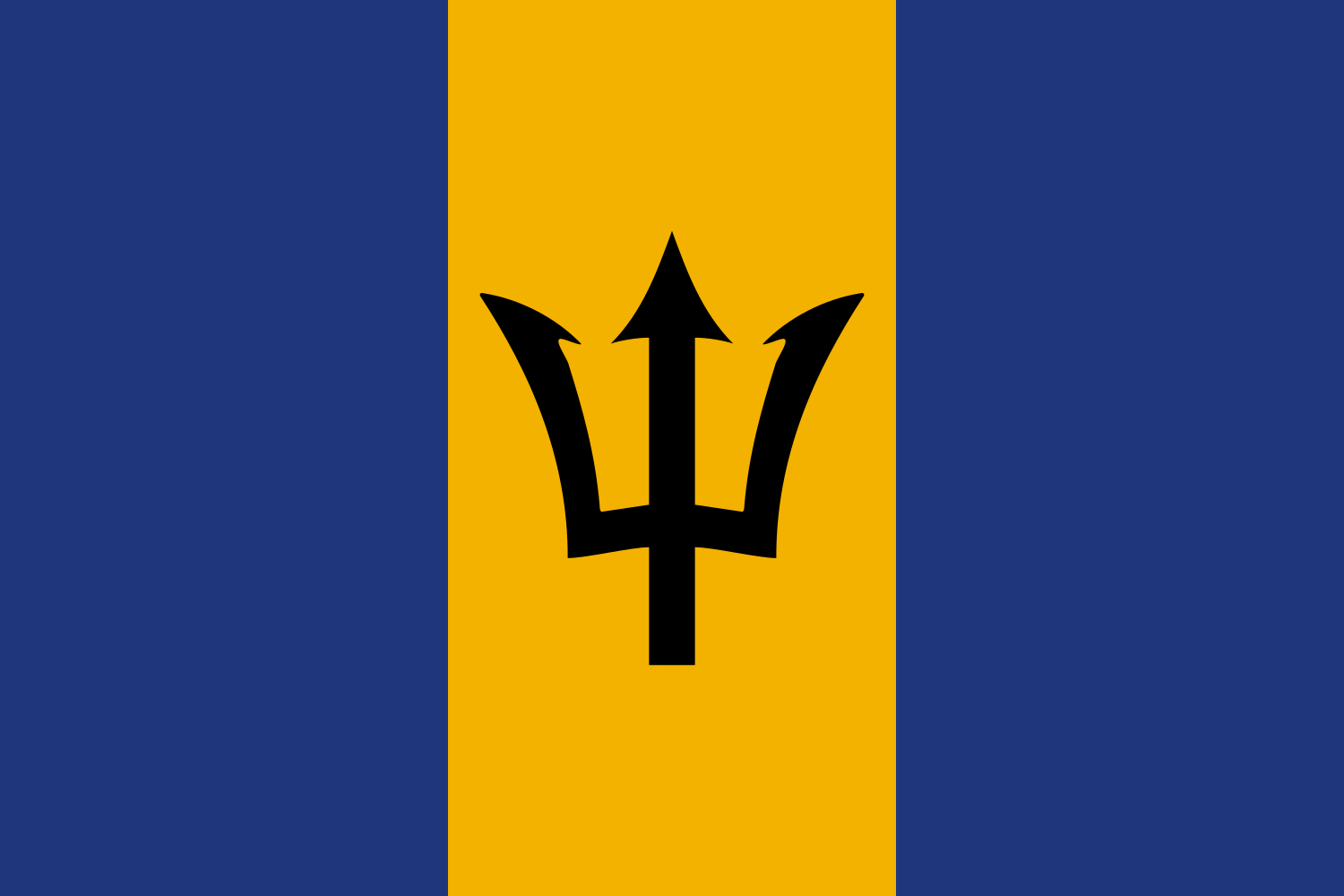
What the flag of Barbados looks like
The national flag of Barbados is a vertical triband of equal bands: ultramarine blue at the hoist, gold in the middle and ultramarine blue at the fly. The proportions are 2:3. In the center of the gold band is a black trident head, drawn without its shaft. Only the three-pointed head is shown, which gives the symbol its common name, the "broken trident".
The trident takes up only a small part of the gold band, so from a distance the flag looks like blue and gold stripes with a dark mark in the middle. Black is used only for the trident, so it covers a small share of the flag. Barbados is an island nation in the eastern Caribbean, and its capital is Bridgetown.
The same design is shown in the Barbados flag emoji, and flag images are available on the Barbados flag download page.
Barbados flag colors
Color codes measured from the official design. Use HEX for the web and CMYK for print.
HEX
#1F367CRGB
31, 54, 124CMYK
75, 56, 0, 51HEX
#F3B100RGB
243, 177, 0CMYK
0, 27, 100, 5HEX
#000000RGB
0, 0, 0CMYK
0, 0, 0, 100Barbados flag meaning and symbolism
The usual explanation of the colors is simple and tied to the island:
- Ultramarine blue stands for the ocean and the sky.
- Gold stands for the sand of the island's beaches.
The trident has more than one reading. It was taken from the colonial badge of Barbados, which showed Britannia holding a trident, so removing the shaft is read as a sign of Barbados breaking free from British rule at independence. The three points are also said to stand for the three principles of democracy: government of the people, by the people and for the people.
The lack of a shaft is therefore the main idea of the whole design, and it explains why people search for the "broken trident meaning". Some sources read both blue stripes as the ocean, but the link between the missing shaft and independence is the one most commonly given.
History of the Barbados flag
Barbados was a British colony from the 1620s until 30 November 1966, when it became independent. Before independence, the island used the British blue ensign with the colonial seal from 1885, the same format as many other British territories. From 1958 to 1962 it was part of the West Indies Federation, which had its own flag.
The independence flag was chosen through a national competition in 1966. The contest drew over a thousand entries, and the winning design was by Grantley W. Prescod, an art teacher. His entry used the blue and gold of the island with the trident from the colonial badge, but without the shaft. The flag came into effect at midnight on 30 November 1966, the day of independence, and was first raised by Lieutenant Hartley Dottin of the Barbados Regiment.
Barbados later changed its constitutional status, becoming a republic on 30 November 2021 and removing the British monarch as head of state. The flag was not changed. It has kept the same design since 1966, and it is flown on Independence Day each year, which is a public holiday.
Barbados, Antigua and Barbuda: do not confuse the flags
Searches for "antigua and barbados flag" are common, but the two countries have different flags. Antigua and Barbuda uses a red field with a black, blue and white triangle and a rising yellow sun. The Barbados flag has no red and no sun. The name "Barbados" is thought to come from the Portuguese os barbados, "the bearded ones", possibly a reference to the island's bearded fig trees. Antigua and Barbuda is a separate state farther to the north.
Barbados flag facts
| Country | Barbados |
|---|---|
| Flag adopted | November 30, 1966 |
| Proportions | 2:3 |
| Colors | #1F367C, #F3B100, #000000 |
| Symbols | trident |
| Flag emoji | 🇧🇧 |
| Country code | BB, BRB (ISO 3166) |
| Capital | Bridgetown |
| Continent | North America |
| Population | 303,431 |
| Area | 439 km² |
| Currency | Barbadian dollar |
| National anthem | National Anthem of Barbados |
Barbados flag: frequently asked questions
What does the trident mean on the Barbados flag?
The trident comes from the island's old colonial badge. Without its shaft, it is said to show Barbados breaking from British colonial rule. The three points are also said to represent government of the people, by the people and for the people.
What do the colors of the Barbados flag mean?
Ultramarine blue stands for the sea and sky, and gold stands for the sand. Black is used for the trident.
Who designed the Barbados flag?
Grantley W. Prescod, a Barbadian art teacher, designed the flag. His design won a national competition held in 1966.
Is Barbados in the Caribbean?
Yes. Barbados is a Caribbean island in the Lesser Antilles, east of the Windward Islands. It became independent from the United Kingdom on 30 November 1966, the day its flag was first raised.
What language is spoken in Barbados?
English is the official language. Most people also speak Bajan, an English-based Creole.
What was Barbados originally called?
Before European settlement, the island is said to have been known to its Indigenous inhabitants as Ichirouganaim. The name Barbados itself comes from the Portuguese for "the bearded ones".
What was the original flag of Barbados?
Under British rule Barbados used the Union Jack from 1833, then a Blue Ensign with the colonial seal from 1885. From 1958 to 1962 it flew the West Indies Federation's "Sun and Seas" flag. The current flag replaced these at midnight on 30 November 1966, the day of independence.
What is the motto of Barbados?
The national motto is "Pride and Industry". The flag carries no words; its broken trident, centered on the gold band, is the symbol of the break from British colonial rule.