Africa · ST / STP
Flag of São Tomé and Príncipe
The São Tomé and Príncipe flag has two green stripes around a wider yellow stripe, a red triangle at the hoist and two black stars in the yellow band. The stars stand for the two main islands of this small African country.
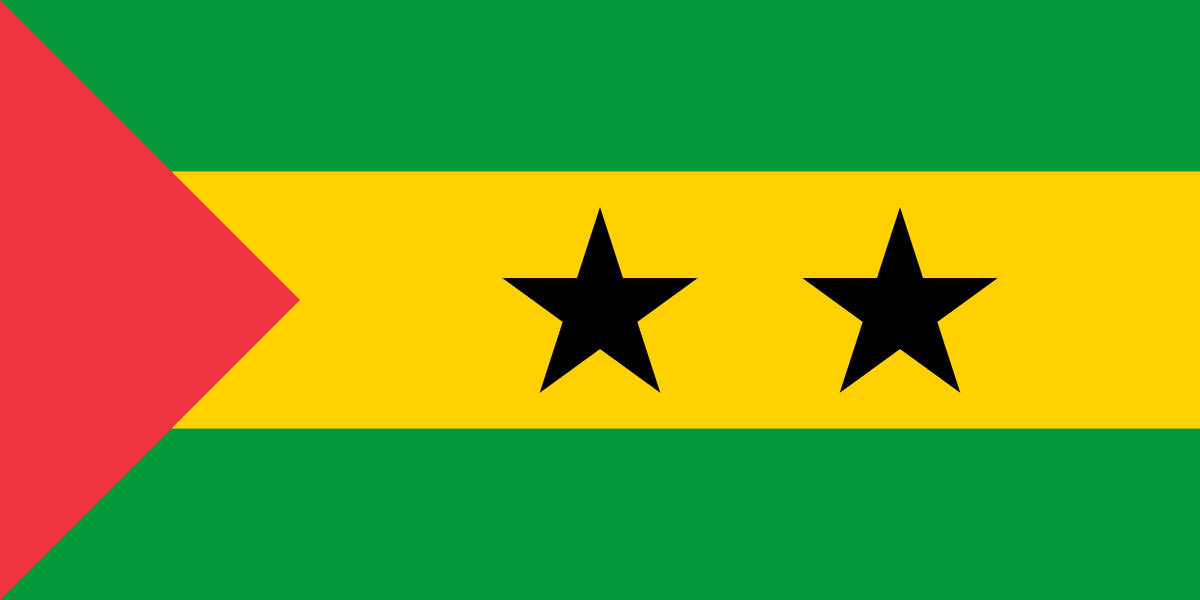
What the flag of São Tomé and Príncipe looks like
The flag has three horizontal stripes. The top and bottom stripes are green, and the central yellow stripe is wider than each green one. A red triangle with its base on the hoist points toward the fly. On the yellow stripe are two black five-pointed stars placed side by side. The proportions are 1:2.
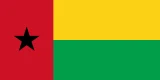
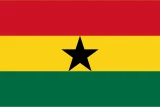
The green, yellow and red are the Pan-African colors, as in the flags of Ghana and Ethiopia, with the addition of black in the stars. The proportions of the bands are 2:3:2. The São Tomé and Príncipe flag emoji reproduces the layout. Another flag from a former Portuguese colony is that of Guinea-Bissau.
São Tomé & Príncipe flag colors
Color codes measured from the official design. Use HEX for the web and CMYK for print.
HEX
#009739RGB
0, 151, 57CMYK
100, 0, 62, 41HEX
#FFD100RGB
255, 209, 0CMYK
0, 18, 100, 0HEX
#EF3340RGB
239, 51, 64CMYK
0, 79, 73, 6HEX
#000000RGB
0, 0, 0CMYK
0, 0, 0, 100São Tomé and Príncipe flag meaning and symbolism
According to the office of the president, green, yellow and red are the Pan-African colors and represent the independence movement, the triangle represents equality, and the two black stars represent the two islands, São Tomé and Príncipe. Sources differ: vexillologist Whitney Smith gives green as the islands' vegetation, yellow as the tropical sun, red as equality and the independence movement, and the black stars as the African population of the islands, while the CIA World Factbook says yellow stands for cocoa.
History of the São Tomé and Príncipe flag
The islands were uninhabited when the Portuguese began colonising them in the 16th century. A nationalist struggle grew after the Batepá massacre of 1953, and the MLSTP was founded in 1960. After the Carnation Revolution in Portugal in 1974, Portugal recognised the MLSTP as the sole and legitimate representative of the people, and independence came on 12 July 1975.
The flag is based on the first flag of the Movement for the Liberation of São Tomé and Príncipe (MLSTP), the independence party, and differs mainly in that its bands are in the ratio 2:3:2, while the MLSTP flag had equal bands. Eight designs were reviewed, and a modified MLSTP flag designed by the first president, Manuel Pinto da Costa, was adopted on independence, 12 July 1975. The yellow band is one and a half times the width of each green band.
About the country
São Tomé and Príncipe lies in the Gulf of Guinea, just north of the equator, off the coast of Gabon. It is one of Africa's smallest countries, and its economy depends mostly on cocoa and, increasingly, tourism. The capital is the city of São Tomé on the larger island.
São Tomé & Príncipe flag facts
| Country | São Tomé & Príncipe |
|---|---|
| Flag adopted | July 12, 1975 |
| Proportions | 1:2 |
| Colors | #009739, #FFD100, #EF3340, #000000 |
| Symbols | triangle, five-pointed star |
| Flag emoji | 🇸🇹 |
| Country code | ST, STP (ISO 3166) |
| Capital | São Tomé |
| Continent | Africa |
| Population | 204,327 |
| Area | 1,001 km² |
| Currency | São Tomé and Príncipe dobra |
| National anthem | Independência total |
São Tomé & Príncipe flag: frequently asked questions
What country is the flag with two black stars on it?
It is São Tomé and Príncipe, an island country in the Gulf of Guinea off the coast of Central Africa.
Is São Tomé a Spanish or Portuguese country?
Portuguese. The islands were colonised by Portugal from the 16th century until independence in 1975, and Portuguese is the official language.
What do the black stars on the São Tomé and Príncipe flag mean?
They stand for the two main islands, São Tomé and Príncipe. Whitney Smith also reads them as representing the African population of the islands.
What do the colors mean?
Officially, green, yellow and red are the Pan-African colors and represent the independence movement. Other sources read green as vegetation, yellow as the sun or cocoa, and red as the independence movement.