Africa · EG / EGY
Flag of Egypt
The flag of Egypt is a horizontal tricolor of red, white and black with the national emblem, a golden Eagle of Saladin, in the center of the white band. Its three colors are the Arab Liberation colors, shared with several other Arab states.
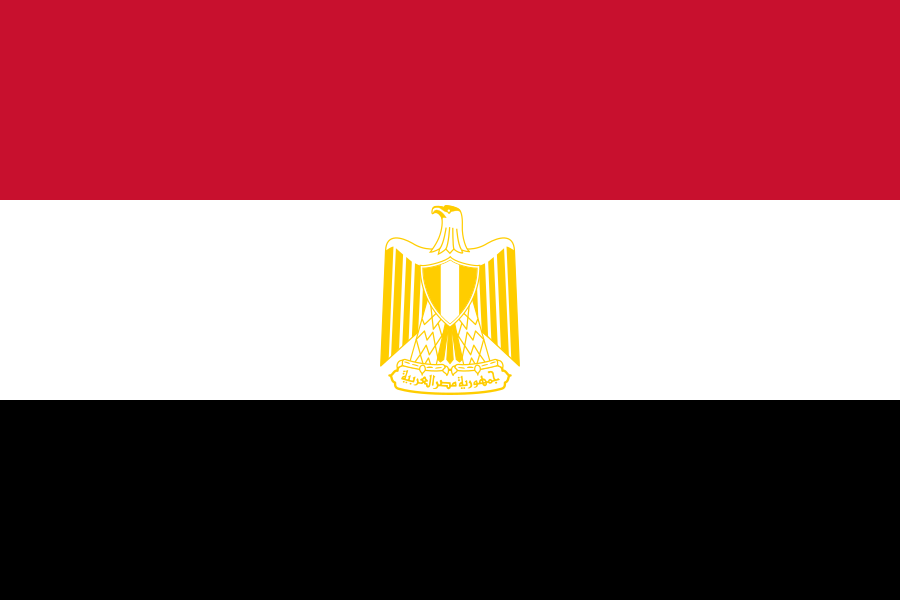
What the Egyptian flag looks like
The Egyptian flag has three horizontal bands of equal size: red at the top, white in the middle and black at the bottom. The proportions are 2:3. In the center of the white band stands the national emblem, the Eagle of Saladin, drawn in gold.
The eagle carries a shield on its chest, and on the flag the shield is gold and white. Its talons rest on a golden scroll bearing the name of the country in Arabic, Jumhuriyat Misr al-Arabiyya (Arab Republic of Egypt). The same eagle appears on the coat of arms, where the shield is colored differently, so the flag and the state emblem share one visual identity.
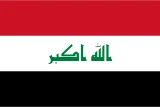
Because the three stripes are not unique, the plain tricolor is easy to mix up with other flags. Yemen uses exactly the same red, white and black stripes without any emblem. Iraq has the same stripes too, with the Arabic words Allahu Akbar in green in the white band. Egypt's flag is the one with the eagle. You can also see how it appears on screens as the Egypt flag emoji.
Egypt flag colors
Color codes measured from the official design. Use HEX for the web and CMYK for print.
HEX
#C8102ERGB
200, 16, 46CMYK
0, 92, 77, 22HEX
#000000RGB
0, 0, 0CMYK
0, 0, 0, 100HEX
#FFFFFFRGB
255, 255, 255CMYK
0, 0, 0, 0Egypt flag meaning and symbolism
The colors come from the Egyptian revolution of 1952 and the Pan-Arab movement that followed it. The Free Officers who toppled King Farouk in the 23 July Revolution gave each band a meaning. Red stands for the blood of the Egyptians in the war against colonization. White stands for the purity of the Egyptians' hearts. Black stands for the way darkness is overcome. Other explanations are sometimes given, such as a bright future for white, but these are informal.
The golden Eagle of Saladin is named after Salah ad-Din (Saladin), the 12th-century sultan who founded the Ayyubid dynasty in Egypt and defeated the Crusaders at Hattin. The name is a 20th-century one: the eagle became a symbol of Arab pride and strength after the 1952 revolution, and it is also seen as reflecting a much older Egyptian origin in the Egyptian vulture, a bird sacred to Isis and Mut in ancient Egypt. The scroll below the eagle carries the name of the state.
People often ask why there is an eagle on the Egyptian flag. It marks the republic's link to Arab history and power, and is a reminder of a medieval ruler from Cairo. It was the emblem of the 1952 revolution, and it is a symbol that is not tied to a religion or a dynasty, unlike the crescents and stars of earlier flags.
History of the Egyptian flag
Ancient Egypt did not have a national flag in the modern sense. Armies and temple processions carried standards, which were emblems on tall poles, often showing a god, an animal or the symbol of a province. These are sometimes shown as the "ancient Egypt flag", but nothing like a single flag for the whole country existed.
In the 19th century, under Muhammad Ali and his dynasty, Egypt used red flags with white crescents and stars, similar to the Ottoman banner. In 1922 Britain recognized Egyptian independence on condition that the sultan take the title of king, and King Fuad I adopted a flag that was green with a white crescent and three white stars. It remained the official flag until 1958, even after the monarchy was abolished in 1953.
The revolution of 1952, led by the Free Officers, ended the monarchy. After the revolution the Free Officers introduced the Liberation Flag, a red, white and black tricolor with the Eagle of Saladin in the white band, alongside the kingdom's flag. In 1958, when Egypt and Syria formed the United Arab Republic, the national flag became the tricolor with two green stars in the white band, one for each country. Egypt kept this version until 1972, though Syria left the union in 1961.
In 1972 Egypt joined the Federation of Arab Republics with Syria and Libya, and the flag bore a gold hawk of Quraish in the white band. The federation was dissolved in 1977, but Egypt kept the hawk flag until 4 October 1984, when the hawk was replaced by the Eagle of Saladin, giving the current flag.
Flags similar to the Egyptian flag
Syria used a red, white and black tricolor with two green stars until December 2024, and Yemen, Iraq and Sudan all share the same Pan-Arab palette in different arrangements. This is because Egypt's Liberation flag of 1952 inspired several Arab countries, which adopted it. Of these, Egypt's is the one with the Eagle of Saladin.
Egypt flag facts
| Country | Egypt |
|---|---|
| Flag adopted | October 4, 1984 |
| Proportions | 2:3 |
| Colors | #C8102E, #000000, #FFFFFF |
| Symbols | Eagle of Saladin |
| Flag emoji | 🇪🇬 |
| Country code | EG, EGY (ISO 3166) |
| Capital | Cairo |
| Continent | Africa |
| Population | 114,535,772 |
| Area | 1,010,408 km² |
| Currency | Egyptian pound |
| National anthem | Bilady, Bilady, Bilady |
Egypt flag: frequently asked questions
What was the old Egyptian flag?
Before 1952 Egypt flew a green flag with a white crescent and three stars (from 1922). After the 1952 revolution the red, white and black Liberation flag with the Eagle of Saladin was introduced, though the kingdom's flag stayed official until 1958. From 1958 to 1972 the flag had two green stars during the union with Syria.
Why did Egypt change its flag?
The flag changed with the country's politics: the 1952 revolution introduced the red, white and black Liberation flag, the 1958 union with Syria brought two green stars, the 1972 federation with Syria and Libya brought the Hawk of Qureish, and in 1984 the Eagle of Saladin returned. The red, white and black stripes stayed.
Why is there an eagle on the Egyptian flag?
The golden eagle is the Eagle of Saladin, named after the 12th-century ruler of Egypt. It was the emblem of the 1952 revolution and, in its 1958 version, has been the national emblem on the flag since 1984.
Which flag is similar to the Egyptian flag?
The flags of Yemen and Iraq use the same red, white and black stripes. Yemen has no emblem, and Iraq has green Arabic script in the white band, while Egypt has a golden eagle.
Did ancient Egyptians have a flag?
Not in the modern sense. They used standards, which were emblems on poles representing gods or regions, but there was no single national flag.
What does the Egypt flag emoji look like?
The Egyptian flag emoji shows the red, white and black stripes and a small gold eagle in the center. It is formed from the regional indicator letters E and G.
What was the first flag of Egypt?
Ancient Egypt had only standards, not a national flag. The first modern flag was the red banner with white crescents and stars introduced under Muhammad Ali and his dynasty, similar to the Ottoman flag. In 1922 King Fuad adopted a green flag with a white crescent and three stars.
What did the Egyptian flag look like in 1967?
In 1967 Egypt was in the United Arab Republic period (1958-1972), so the flag was the red, white and black tricolor with two green stars in the white band, one for each country in the union with Syria. The Hawk of Qureish replaced the stars in 1972, and the Eagle of Saladin followed in 1984.
What does the black mean in the Egyptian flag?
The black band stands for the way darkness is overcome. It was given its meaning by the Free Officers after the 1952 revolution, along with red for the blood of Egyptians in the struggle against colonization and white for the purity of their hearts.
What are some interesting facts about the Egyptian flag?
The eagle is the Eagle of Saladin, which reflects an older Egyptian vulture symbol sacred to Isis and Mut. The same red, white and black stripes are used by Iraq, Sudan and Yemen. The current flag dates from 4 October 1984, when the Egypt flag replaced the hawk of Qureish with the eagle.