Africa · SH / SHN
Flag of Saint Helena
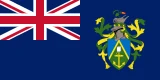
The Saint Helena flag is a British blue ensign with the territory's coat of arms in the fly: a shield showing a sailing ship off a rocky coast. The island in the South Atlantic is best known as Napoleon's place of exile.
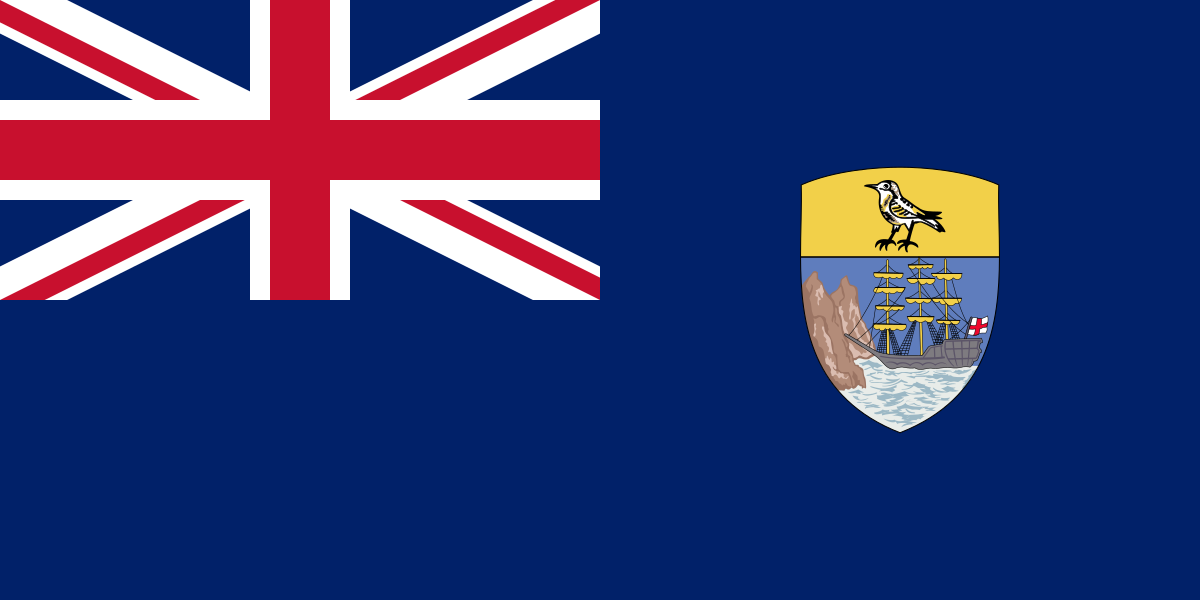
What the Saint Helena flag looks like
The flag is a blue ensign: a dark blue field with the Union Jack in the upper hoist corner and the territory's badge in the fly. The badge is a shield showing a rocky coastline and a three-masted sailing ship, with a Saint Helena plover, the island's endemic wirebird, on the yellow upper part. The proportions are 1:2.
This is the flag of Saint Helena island itself. The wider territory is officially called Saint Helena, Ascension and Tristan da Cunha, and Ascension Island and Tristan da Cunha each have a flag of their own. See also the Saint Helena flag emoji and the flag of the United Kingdom.
Saint Helena flag colors
Color codes measured from the official design. Use HEX for the web and CMYK for print.
HEX
#012169RGB
1, 33, 105CMYK
99, 69, 0, 59HEX
#C8102ERGB
200, 16, 46CMYK
0, 92, 77, 22HEX
#FFFFFFRGB
255, 255, 255CMYK
0, 0, 0, 0Saint Helena flag meaning and symbolism
The Union Jack shows the island's status as a British Overseas Territory. In the badge, the ship is an East Indiaman, recalling the East India Company vessels that called at the island, and the Cross of Saint George flown from the ship is a symbol of England, Saint Helena's mother country. The steep coast reflects the island's cliffs, and the wirebird is the last endemic bird species of the island and its official bird.
The island itself is named for Helena, mother of the Roman emperor Constantine. It was first sighted by the Portuguese navigator João da Nova in May 1502, and the island's feast-day holiday on 21 May honors Helena.
History of the Saint Helena flag
Saint Helena had no settled population when the Portuguese found it. The English East India Company was given a royal charter to govern it in 1659, it was a crown colony during Napoleon's exile from 1815 to 1821, and it became a crown possession again in 1834. The French emperor Napoleon Bonaparte was held on the island from 1815 until his death in 1821, which is what it is most famous for. The island also served as a base for the Royal Navy's campaign against the slave trade.
The island received a badge in 1874 showing an East Indiaman off a rocky coast. The badge was redesigned in 1984 with the plover added, and the flag, a blue ensign with the shield from the coat of arms, was adopted that year; the Admiralty authorized the change in 1994. Minor updates to the shield were made in 2019. The island became a British Overseas Territory in 2002.
Saint Helena flag facts
| Country | St Helena, Ascension & Tristan da Cunha |
|---|---|
| Flag adopted | 1984 |
| Proportions | 1:2 |
| Colors | #012169, #C8102E, #FFFFFF |
| Flag emoji | 🇸🇭 |
| Country code | SH, SHN (ISO 3166) |
| Capital | Jamestown |
| Continent | Africa |
| Population | 5,633 |
| Area | 394 km² |
| Currency | pound sterling, Saint Helena pound |
| National anthem | God Save the King |
Saint Helena flag: frequently asked questions
What country does St Helena belong to?
It belongs to the United Kingdom as a British Overseas Territory. It is not an independent country and is governed with a local council and a governor.
What is Saint Helena's symbol?
The wirebird, a small endemic plover, is the best-known symbol, and it appears on the shield of the coat of arms shown on the flag, above the ship and coastline.
Do Ascension and Tristan da Cunha use the Saint Helena flag?
Not any more. The Saint Helena flag was used as the official flag of Tristan da Cunha and, unofficially, on Ascension Island, until they adopted their own flags in 2002 and 2013. All three are part of the same British Overseas Territory.