Oceania · NZ / NZL
Flag of New Zealand
The New Zealand flag is a blue ensign with the Union Jack in the top corner and four red, white-edged stars of the Southern Cross on the fly. New Zealanders voted in 2016 to keep it, rather than adopt a new design.
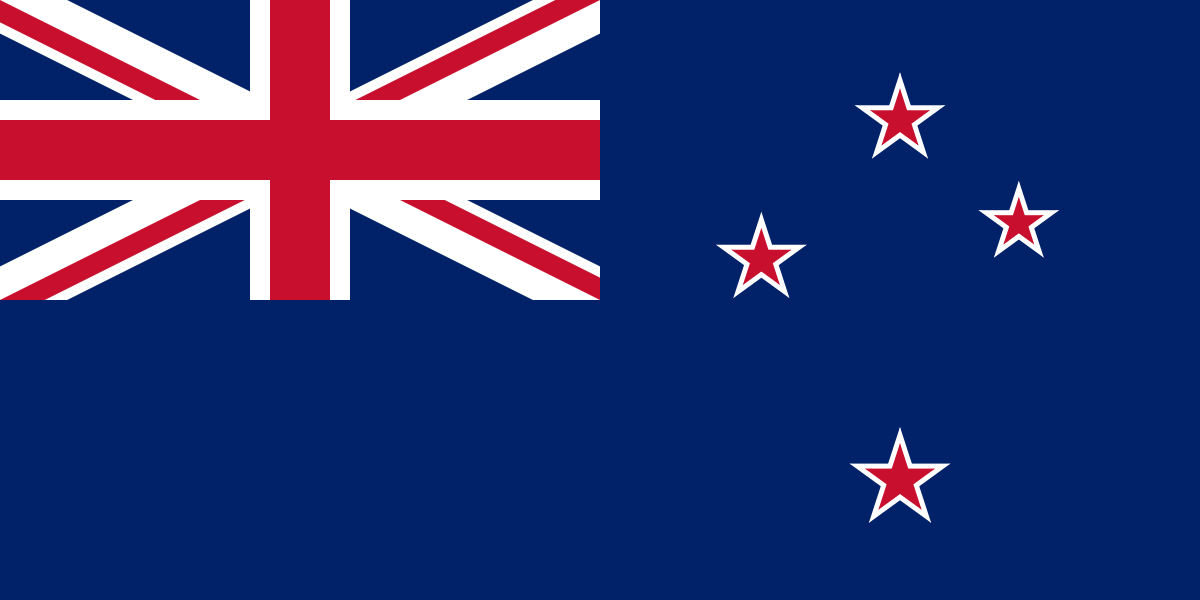
What the flag of New Zealand looks like
The flag of New Zealand is a blue ensign: a dark blue field with the Union Jack in the upper corner next to the pole (the canton). The ratio is 1:2. On the fly side there are four five-pointed red stars, each with a thin white border. They represent the Southern Cross, a striking constellation of the southern hemisphere sky.
The red fill and white outline make the stars stand out against the blue background.
The flag's design makes it look very much like the flag of its neighbor Australia, and the difference between them is a common question (see below). It can also be shown as the New Zealand flag emoji.
New Zealand flag colors
Color codes measured from the official design. Use HEX for the web and CMYK for print.
HEX
#012169RGB
1, 33, 105CMYK
99, 69, 0, 59HEX
#C8102ERGB
200, 16, 46CMYK
0, 92, 77, 22HEX
#FFFFFFRGB
255, 255, 255CMYK
0, 0, 0, 0New Zealand flag meaning and symbolism
The Union Jack recalls New Zealand's history as a British colony and its continuing ties to the United Kingdom and the Commonwealth. The blue field is described by the government as reminiscent of the sea and sky surrounding the country, and it is derived from the Blue Ensign of the Royal Navy.
The Southern Cross places the country in the southern hemisphere. Its four stars are Alpha, Beta, Gamma and Delta Crucis. The stars are described as signifying New Zealand's place in the South Pacific Ocean. In Māori mythology the Southern Cross is also known as Māhutonga.
Opinions on the symbolism are divided. Supporters of the flag value the link to the shared history and to its use in the world wars, and critics say it does not reflect the country's independent, Māori and Pacific identity.
History of the New Zealand flag
In 1834, before New Zealand became a British colony, a group of northern Māori chiefs chose the Flag of the United Tribes of New Zealand at an assembly convened by the British Resident, James Busby, where three designs by the missionary Henry Williams were proposed. It had a red St George's cross on a white field, with a smaller cross and four stars on a blue canton. It was gazetted in New South Wales in 1835. The Treaty of Waitangi was signed in 1840.
After 1840 the Union Jack was used on land. From 1867 colonial government ships flew a blue ensign with the letters "NZ", and in 1869 a design with the Southern Cross by Albert Hastings Markham was approved, at first only for government ships. It was quickly adopted as the national flag and given statutory recognition in 1902 by the New Zealand Ensign Act 1901. The Flags, Emblems, and Names Protection Act of 1981 now governs its use.
New Zealand has debated changing its flag many times. In 2015 and 2016 the government held two referendums. The first, in late 2015, chose a design with a silver fern in black, white and blue by Kyle Lockwood from five options. In the second, in March 2016, about 57 percent of voters chose to keep the current flag, against 43 percent for the fern design. The flag did not change.
Another flag is often seen in New Zealand: the Māori tino rangatiratanga flag, in black, white and red, designed in 1989, which is flown as a symbol of Māori self-determination.
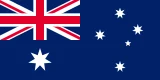
New Zealand flag vs Australian flag
The two flags both have a blue field, the Union Jack and the Southern Cross, which is why they are mixed up. The differences are:
- New Zealand has four stars. Australia has five stars in the Southern Cross, plus a large seven-pointed Commonwealth Star under the Union Jack.
- The New Zealand stars are red with a white border, and the Australian stars are all white.
- The New Zealand stars have five points. Four of the Australian Southern Cross stars have seven points, and the small one has five.
The New Zealand ensign was in use on ships from 1869, while Australia chose its flag after federation in 1901.
New Zealand flag facts
| Country | New Zealand |
|---|---|
| Flag adopted | March 24, 1902 |
| Proportions | 1:2 |
| Colors | #012169, #C8102E, #FFFFFF |
| Symbols | Crux, five-pointed star, Union Jack |
| Flag emoji | 🇳🇿 |
| Country code | NZ, NZL (ISO 3166) |
| Capital | Wellington |
| Continent | Oceania |
| Population | 5,307,800 |
| Area | 268,021 km² |
| Currency | New Zealand dollar |
| National anthem | God Defend New Zealand |
New Zealand flag: frequently asked questions
Why does NZ have the UK flag?
New Zealand was a British colony and became a self-governing dominion, and its flag follows the British Blue Ensign pattern. The Union Jack in the corner shows its historical ties to Britain and the Commonwealth, and some New Zealanders think it no longer reflects the country's independence.
Why does NZ only have 4 stars?
The four stars represent the four brightest stars of the Southern Cross, a constellation visible from New Zealand. Australia's flag shows a fifth, smaller star.
What is the difference between Australia and New Zealand's flag?
New Zealand has four red stars with white edges, while Australia has five white stars and an extra seven-pointed Commonwealth star. Australia's Southern Cross is also arranged slightly differently.
Is New Zealand changing its flag?
Not at present. After two referendums in 2015 and 2016, voters decided by about 57 percent to 43 percent to keep the current flag.
What are the two flags of New Zealand?
The national flag is the blue ensign with the Southern Cross. The Māori flag, called tino rangatiratanga, was designed in 1989 and is acknowledged as a national flag for the Māori, but it is not the national flag of the country.
Why are the Australian and New Zealand flags so similar?
Both are based on the British Blue Ensign and show the Union Jack and the Southern Cross on a blue field, because both were British colonies in the southern hemisphere. The stars are what separate them: see Australia's flag.