Oceania · MH / MHL
Flag of the Marshall Islands
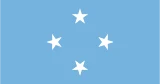
The Marshall Islands flag is a blue field crossed by two diagonal rays, orange above white, that widen toward the fly. A white star with 24 points, four of them longer, sits in the upper hoist corner.
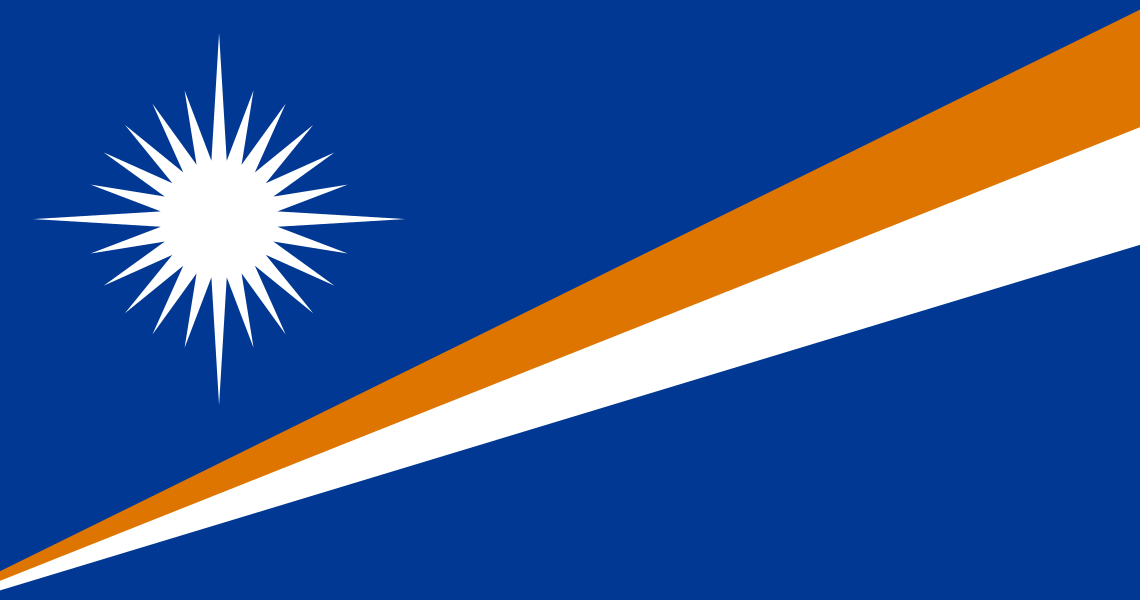
What the flag of the Marshall Islands looks like
The flag has a deep blue background. Two stripes begin at the lower hoist corner and rise diagonally toward the upper fly, getting wider as they go. The upper stripe is orange and the lower one is white. In the top left corner, above the stripes, is a white star with 24 points. Four of the points, at north, south, east and west, are longer than the rest. The flag is about 10:19 in proportion.
The diagonal stripes make this flag stand out among the many blue flags of the Pacific. A small version is also used as the Marshall Islands flag emoji.
Marshall Islands flag colors
Color codes measured from the official design. Use HEX for the web and CMYK for print.
HEX
#003893RGB
0, 56, 147CMYK
100, 62, 0, 42HEX
#FFFFFFRGB
255, 255, 255CMYK
0, 0, 0, 0HEX
#DD7500RGB
221, 117, 0CMYK
0, 47, 100, 13Marshall Islands flag meaning and symbolism
The flag's symbols are explained as follows:
- Blue represents the Pacific Ocean.
- Orange represents courage, and the white stripe peace.
- The white and orange portions of the band represent the Ratak (“sunrise”) and Ralik (“sunset”) island chains, and the diagonal band as a whole stands for the equator.
- The star has 24 points for the 24 municipalities, or electoral districts, of the republic. The four long rays stand for the principal cultural centers of Majuro, Jaluit, Wotje and Ebeye.
The rising diagonal band represents the equator, and the star above it represents this Northern Hemisphere archipelago.
History of the Marshall Islands flag
The islands were claimed by Germany in the 1880s, taken by Japan in 1914, and captured by the United States during World War II. From 1947 they were part of the US-administered Trust Territory of the Pacific Islands, flying the trust territory's own flag.
As the Marshall Islands moved toward self-government, a new national flag was needed. It was designed by Emlain Kabua, the wife of Amata Kabua, who became the first president. The flag was adopted on 1 May 1979, when the Marshall Islands gained a constitution and began governing itself. The Compact of Free Association with the United States took effect in 1986, giving the islands full control of their internal and foreign affairs, and the country joined the United Nations in 1991. The flag has not changed since 1979.
Why ships fly the Marshall Islands flag
The Marshall Islands runs one of the largest ship registries in the world. Many oil tankers, bulk carriers and some yachts are registered there for tax, regulation and cost reasons even though their owners are elsewhere, so the flag is seen at sea more often than on the islands. The Marshall Islands is a sovereign country in free association with the United States, not a US territory.
Marshall Islands flag facts
| Country | Marshall Islands |
|---|---|
| Flag adopted | May 1, 1979 |
| Proportions | 10:19 |
| Colors | #003893, #FFFFFF, #DD7500 |
| Symbols | Sun, twenty four-pointed star |
| Flag emoji | 🇲🇭 |
| Country code | MH, MHL (ISO 3166) |
| Capital | Majuro |
| Continent | Oceania |
| Population | 53,127 |
| Area | 181 km² |
| Currency | United States dollar, SOV |
| National anthem | Forever Marshall Islands |
Marshall Islands flag: frequently asked questions
What does the Marshall Islands flag mean?
Blue is the Pacific Ocean, orange is courage and white is peace. The diagonal band represents the equator, its white and orange parts stand for the Ratak (sunrise) and Ralik (sunset) island chains, and the 24-point star stands for the 24 electoral districts.
Why do ships fly the Marshall Islands flag?
Because the Marshall Islands operates an international ship registry. Vessels owned all over the world register there and fly its flag, which makes it one of the most common flags on merchant ships.
Does the Marshall Islands have its own flag?
Yes. The national flag was adopted on 1 May 1979 and is used by the government on land and at sea. Some local governments also have their own flags.
Was the Marshall Islands ever a US territory?
Not exactly. After World War II the islands were part of the Trust Territory of the Pacific Islands, a United Nations trusteeship run by the United States from 1947. The current flag was adopted on 1 May 1979 at the start of self-government, and the Compact of Free Association took effect in 1986.
Are the Marshall Islands part of the UK?
No. The Marshall Islands has never been a British possession. The islands were claimed by Germany in the 1880s, taken by Japan in 1914 and captured by the United States in World War II. Today it is an independent republic in free association with the United States, with its own flag since 1979.