Africa · GN / GIN
Flag of Guinea
The flag of Guinea is a vertical tricolor of red, yellow and green, in that order from the hoist. It was adopted in 1958 when the country broke from France, and it uses the Pan-African colors.
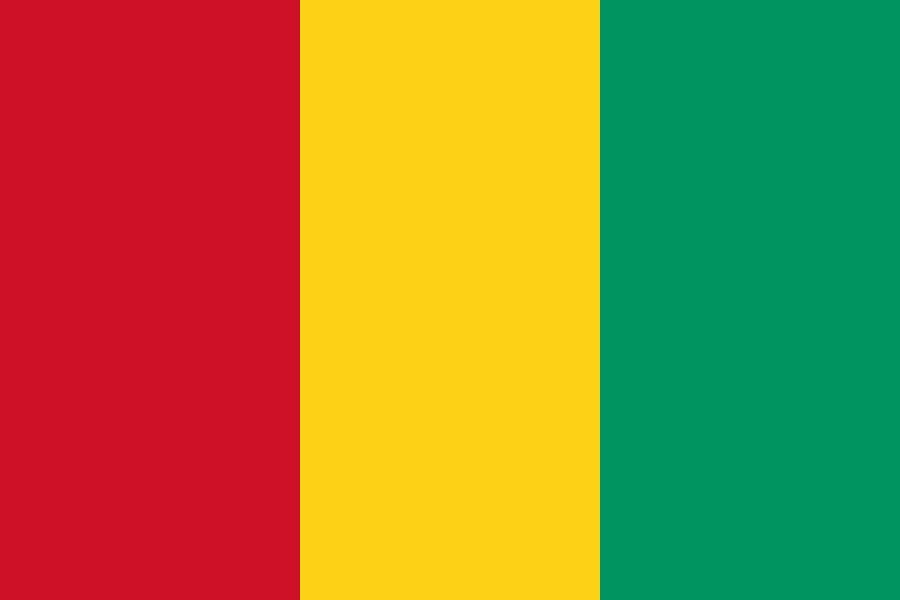
What the flag of Guinea looks like
The national flag of Guinea has three vertical bands of equal width: red at the hoist (the side nearest the pole), yellow in the middle and green at the fly. The proportions are 2:3. There is no emblem, star or writing on it.
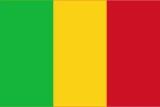
Because it is so plain, it is often confused with other red, yellow and green flags, especially the one from Mali, which has the same colors in the opposite order, with green at the hoist. The name also leads to confusion with other countries called Guinea. This page is about the Republic of Guinea, also known as Guinea-Conakry after its capital, Conakry. See the separate pages for Equatorial Guinea, Guinea-Bissau and Papua New Guinea.
Guinea flag colors
Color codes measured from the official design. Use HEX for the web and CMYK for print.
HEX
#FCD116RGB
252, 209, 22CMYK
0, 17, 91, 1HEX
#CE1126RGB
206, 17, 38CMYK
0, 92, 82, 19HEX
#009460RGB
0, 148, 96CMYK
100, 0, 35, 42Guinea flag meaning and symbolism
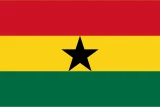
The three colors are the Pan-African colors. They were adapted from those of the Rassemblement Démocratique Africain, the dominant movement at the time of independence, which in turn took them from the flag of Ghana (adopted in 1957). According to Sékou Touré, the first president, they stand for:
- Red for the blood of anti-colonialist martyrs, the labor of the working classes and the wish for progress.
- Yellow for Guinean gold and the sun.
- Green for the country's vegetation and the prosperity arising from its natural resources.
The colors are also read alongside the national motto, Travail, Justice, Solidarité (Work, Justice, Solidarity), with the symbolism of each color corresponding to one component of the motto. The only legislation on the flag states that the stripes must be of equal width.
History of the Guinea flag
Guinea was a French colony, part of French West Africa, and used the French flag. When Charles de Gaulle offered French colonies a choice, Guinea was the only French colony in Africa that refused to remain under the French empire, and it cut all ties with France. Independence came on 2 October 1958, with Ahmed Sékou Touré as the first president.
The flag was adopted shortly afterward, on 10 November 1958. It uses the Pan-African colors, partly as a nod to the flag of Ghana, whose president was a close associate of Sékou Touré, and its stripes evoke the French tricolour. The flag was first published with the country's first Constitution.
The flag later became a point of comparison for other flags. Rwanda's flag in use from 1961 to 2001, a red, yellow and green tricolor, had a large black letter R to tell it apart from the near-identical flag of Guinea.
Flags that look like the Guinea flag
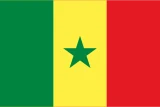
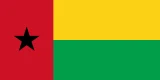
The Guinea flag looks like the flags of Mali, Senegal and Guinea-Bissau. Mali's flag is the same three colors reversed, with green at the hoist. Senegal also has green, yellow and red bands, with a green star in the center. Guinea-Bissau has a red vertical band with a black star, and yellow and green horizontal bands. Guinea's flag is the only one of these that is a plain red-yellow-green tricolor in this order.
Guinea flag facts
| Country | Guinea |
|---|---|
| Flag adopted | November 10, 1958 |
| Proportions | 2:3 |
| Colors | #FCD116, #CE1126, #009460 |
| Flag emoji | 🇬🇳 |
| Country code | GN, GIN (ISO 3166) |
| Capital | Conakry |
| Continent | Africa |
| Population | 17,521,167 |
| Area | 245,857 km² |
| Currency | Guinean franc |
| National anthem | Liberté |
Guinea flag: frequently asked questions
What do the colors of the Guinea flag mean?
Red stands for the blood of martyrs and labor, yellow for gold and the sun, and green for vegetation. They are also the Pan-African colors.
Do Guinea and Mali have the same flag?
No, but they are very similar. Both are red, yellow and green vertical tricolors. Guinea has red at the hoist, while Mali has green at the hoist.
Is Guinea an African nation?
Yes. Guinea is in West Africa on the Atlantic coast, and its capital is Conakry. It borders Guinea-Bissau, Senegal, Mali, Ivory Coast, Liberia and Sierra Leone.
What is the difference between Guinea and Equatorial Guinea?
They are separate countries. Guinea is in West Africa and was a French colony, while Equatorial Guinea is in Central Africa and was a Spanish colony. Their flags are not alike.
Where do the colors of the Guinea flag come from?
They were adapted from the Rassemblement Démocratique Africain, whose colors came from Ghana's flag of 1957. Guinea's first president, Sékou Touré, was a close associate of Ghana's Kwame Nkrumah. The flag became official on 10 November 1958.