U.S. state · MO
Flag of Missouri
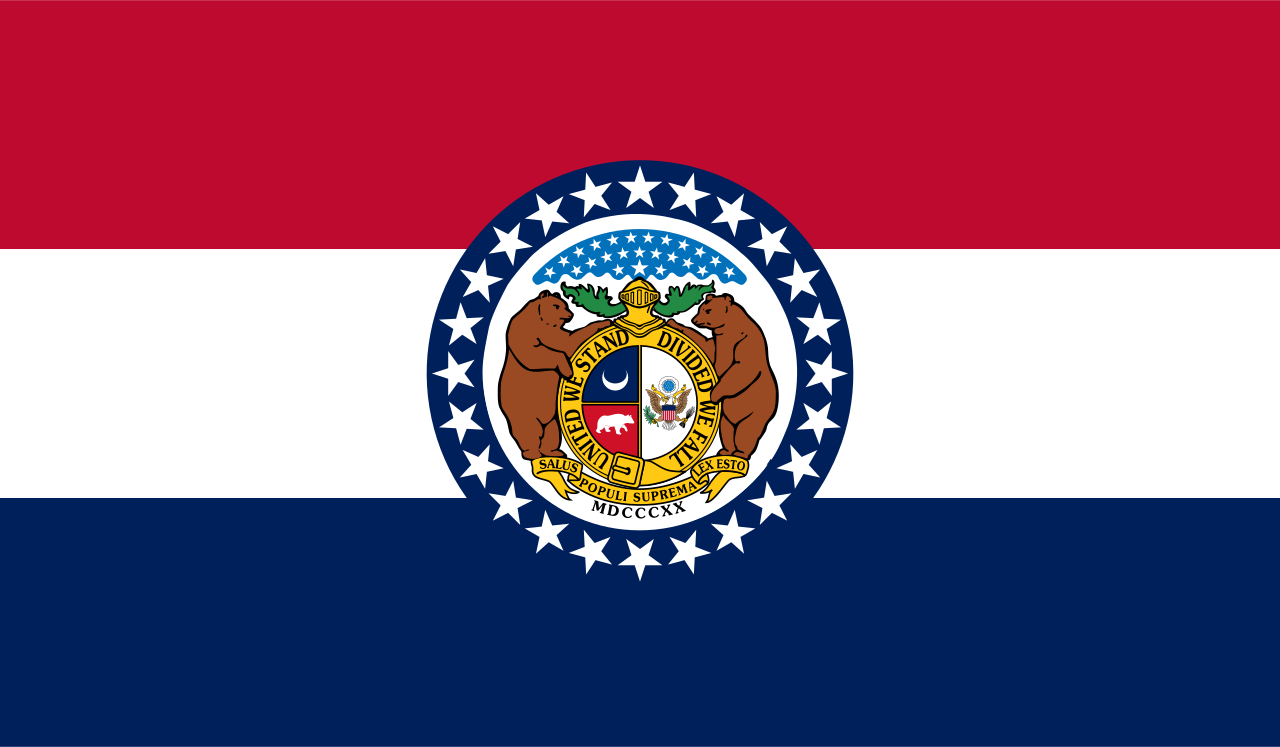
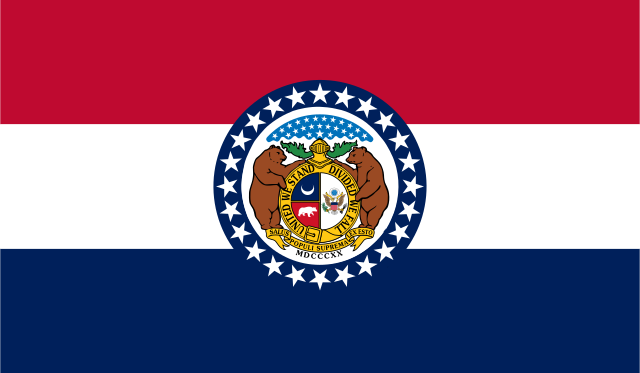
The Missouri flag has three horizontal stripes of red, white and blue, with the state coat of arms in the center inside a blue ring of 24 stars. It was designed by Marie Elizabeth Oliver and adopted in 1913.
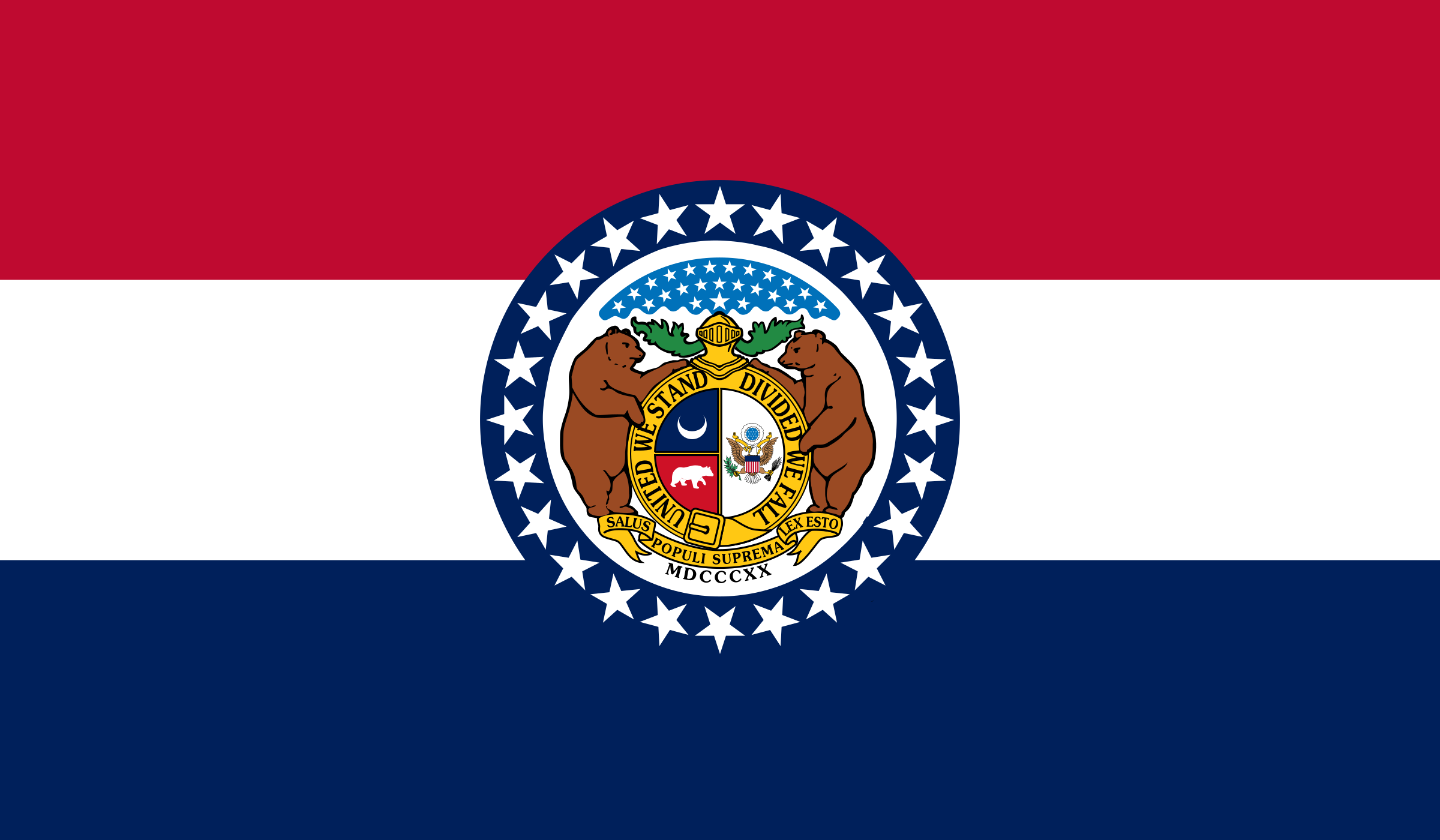
What the Missouri state flag looks like
The Missouri flag is made of three equal horizontal stripes: red on top, white in the middle and blue at the bottom. The state coat of arms is placed in the center, on the white stripe and overlapping the red and blue stripes.
The emblem has several parts:
- A blue circle around the arms holds 24 stars.
- Inside it, two grizzly bears stand on either side of a shield. On the shield, one half shows a bear with a crescent, and the other half shows the United States coat of arms with its eagle.
- A helmet and crest sit above the shield, and a ribbon below carries the Latin motto Salus populi suprema lex esto with the Roman numerals MDCCCXX, which stand for 1820.
Missouri flag meaning and symbolism
Red stands for valor, white for purity, and blue for permanency, vigilance and justice. The three colors also reflect the French influence on the state in its early years.
The 24 stars show that Missouri was the 24th state to join the Union, in 1821. The bears make Missouri one of only two U.S. state flags to feature a bear, the other being California. The motto translates as "Let the welfare of the people be the supreme law." The numerals MDCCCXX stand for the year 1820.
History of the Missouri flag
Missouri had no official state flag until the twentieth century, though various unofficial banners carried the state coat of arms. The flag was designed by Marie Elizabeth Oliver of Cape Girardeau, who began the project in 1908 for the Daughters of the American Revolution. Governor Elliot Woolfolk Major signed the bill adopting it on March 22, 1913.
The red, white and blue stripes are said to reflect Missouri's French colonial past, though the horizontal layout also resembles the flag of the Netherlands. The design has remained unchanged since 1913. Compare it with Nebraska or browse all U.S. state flags.
Interesting facts about the Missouri flag
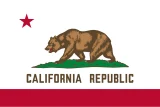
- It is one of only two U.S. state flags to feature a bear, the other being California.
- The state statute describes the bears as white or grizzly bears.
- The Missouri flag is a rectangle of unusual proportions, roughly 12:7.
Missouri flag colors
#00205BRGB
0, 32, 91CMYK
100, 65, 0, 64#BF0A30RGB
191, 10, 48CMYK
0, 95, 75, 25#FFFFFFRGB
255, 255, 255CMYK
0, 0, 0, 0Missouri flag facts
| Adopted | March 22, 1913 |
|---|---|
| Proportions | 7:12 |
| Designer | Marie Elizabeth Oliver |
| State capital | Jefferson City |
| State motto | Salus populi suprema lex esto |
| Population | 6,154,913 |
Missouri state flag FAQ
Why does the Missouri flag have 24 stars?
Missouri was the 24th state admitted to the Union, in 1821, so the blue ring around the coat of arms contains 24 stars.
Why is there a bear on the Missouri flag?
Two bears stand on either side of the shield in the state coat of arms. Missouri is one of only two U.S. state flags with a bear, the other being California.
When did Missouri change its state flag?
Missouri adopted its flag on March 22, 1913, and has kept the same design since.
Why is the Missouri flag Dutch?
It is not Dutch. The red, white and blue horizontal stripes look like the Dutch flag, but they are said to reflect the French influence on the state in its early years, with the state arms added in the center.
What does the Latin on the Missouri flag mean?
Salus populi suprema lex esto means "Let the welfare of the people be the supreme law."
What is special about the Missouri state flag?
It combines a red, white and blue horizontal triband with a coat of arms held by two grizzly bears, one of only two state flags with a bear. It is also one of nine with an eagle, and its ratio is an unusual 7:12. The 24 stars mark Missouri as the 24th state.
Who designed the Missouri flag?
Marie Elizabeth Oliver of Cape Girardeau designed it, starting in 1908 as part of her work with the Daughters of the American Revolution. Her first paper flag burned in the 1911 Capitol fire, so she sewed a silk one. Governor Elliot Woolfolk Major signed the bill adopting it on March 22, 1913.