U.S. state · CT
Flag of Connecticut
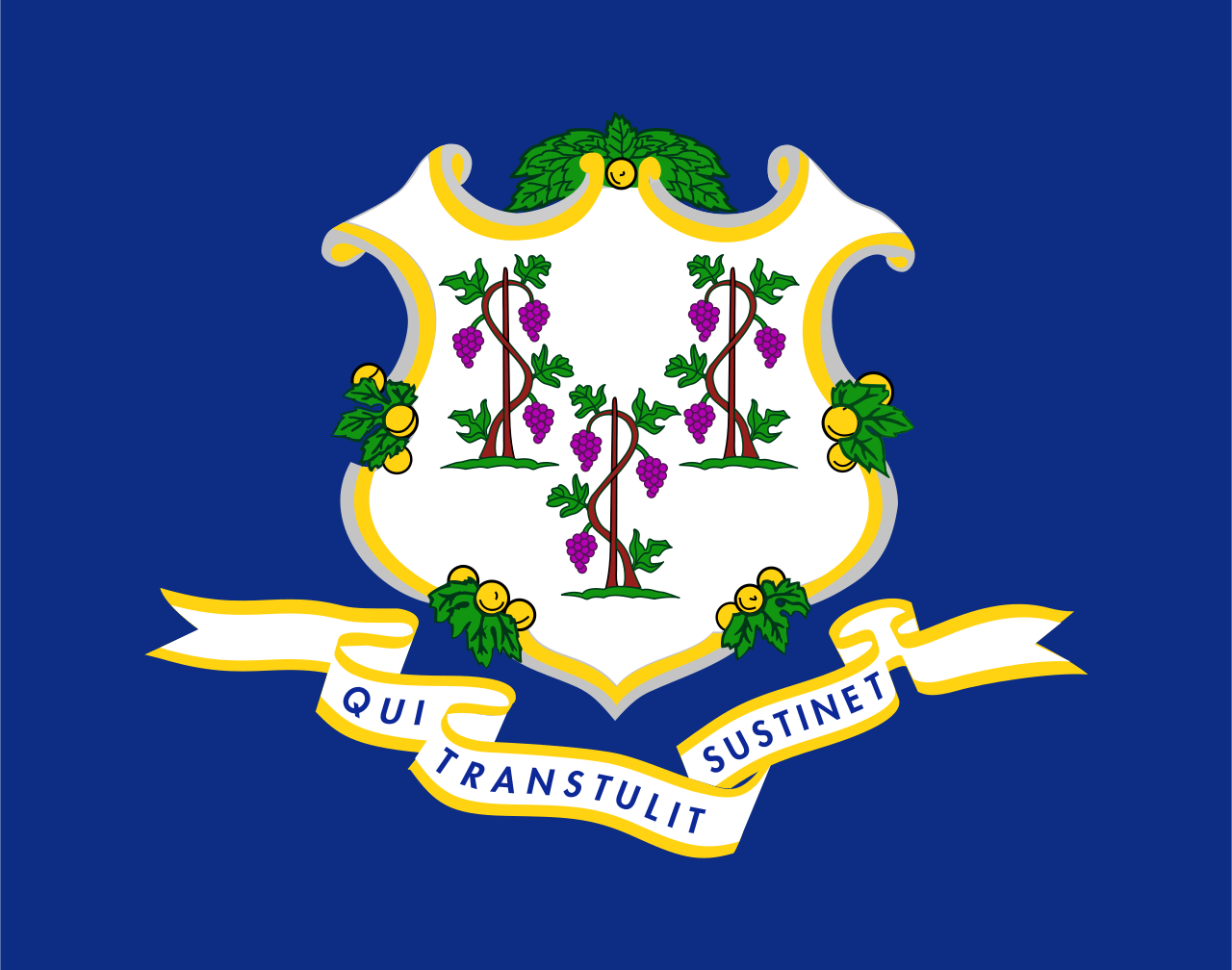
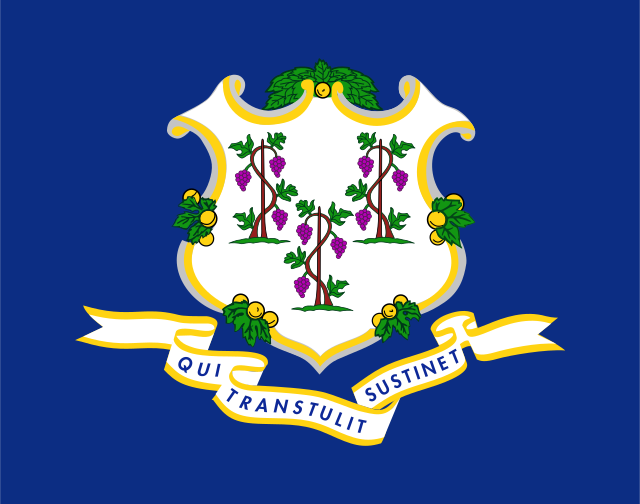
The Connecticut flag is a blue field with a white baroque shield in the center. The shield holds three grapevines, and a ribbon below carries the Latin motto Qui Transtulit Sustinet. It was adopted in 1897.
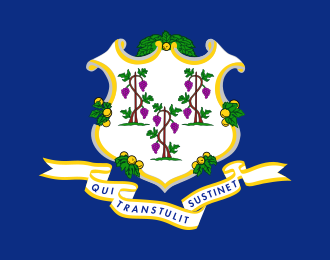
What the Connecticut state flag looks like
The state flag of Connecticut is a field of azure blue. In the middle is a white shield with an ornate, curling border in the baroque or rococo style. The border is gold on the inside and silver on the outside, decorated with white oak leaves and acorns. Inside the shield are three grapevines. Each vine bears three bunches of purple grapes, and the vines are green.
Beneath the shield is a white streamer carrying the state motto, Qui Transtulit Sustinet, in dark blue block letters. The shield and motto are taken from the Connecticut state seal. The flag is closer to square than most U.S. state flags.
Connecticut flag meaning and symbolism
The grapevines are the key symbol. The design comes from the seal of Saybrook Colony, created by George Fenwick in 1639, which showed 15 grapevines and a hand holding a scroll with the motto. When the Connecticut Colony bought Saybrook in 1644, the seal passed to it. On October 25, 1711, the governor and legislature reduced the vines from 15 to three. The three vines are said to stand for the three oldest settlements, Windsor, Wethersfield and Hartford, or possibly for the Connecticut, Saybrook and New Haven colonies.
The motto translates as "He who transplanted sustains." It is often read as a reference to God, who brought the colonists across the ocean and continues to support them, in the same way that a gardener moves and tends vines. The blue background and white shield are not given an official meaning.
History of the Connecticut flag
The grapevine emblem dates to the colonial seal, and several state flags with the coat of arms were flown before an official design existed. The first mention of a state flag is from 1838, and during the Civil War the state senate adopted a deep blue flag with three vines on a white groundwork, nicknamed Blue Peter.
In 1897 the General Assembly approved the current flag, which Governor Owen Vincent Coffin had introduced in 1895 and which Abby Day Slocomb of the Daughters of the American Revolution designed. The adoption date is given as September 9, 1897. The design is now defined in the state statutes as the arms of the state on an azure blue field.
Interesting facts
- Connecticut's nickname is the Constitution State.
- Connecticut was one of the Thirteen Colonies and the fifth state to ratify the U.S. Constitution, in 1788.
See more in our list of U.S. state flags, such as Delaware, or read about the flag of the United States.
Connecticut flag colors
#0C2D83RGB
12, 45, 131CMYK
91, 66, 0, 49#FFFFFFRGB
255, 255, 255CMYK
0, 0, 0, 0#FFD312RGB
255, 211, 18CMYK
0, 17, 93, 0#0D7B14RGB
13, 123, 20CMYK
89, 0, 84, 52Connecticut flag facts
| Adopted | 1897 |
|---|---|
| Proportions | 11:14 |
| State capital | Hartford |
| State motto | Qui Transtulit Sustinet |
| Population | 3,605,944 |
Connecticut state flag FAQ
Why does the CT flag have grapes?
The grapevines come from the seal of Saybrook Colony, which passed to the Connecticut Colony in 1644. The number of vines was reduced from 15 to three in 1711.
What is Connecticut's motto?
The motto is Qui Transtulit Sustinet, Latin for "He who transplanted sustains."
What do the three vines mean?
They are said to stand for the three oldest settlements of Windsor, Wethersfield and Hartford.
When was the Connecticut flag adopted?
The General Assembly approved the current flag in 1897.
What are the colors of the Connecticut flag?
The flag is azure blue with a white shield. The vines and grapes are in natural colors, the shield border is gold and silver, and the streamer is white with dark blue letters.
Why is the Connecticut state flag at half mast?
The flag is customarily lowered to half-staff when the federal flag is, which the President or the Governor may order. Typical reasons include the death of a Connecticut resident serving in the armed forces, a former governor or a serving member of the legislature, or an event of great sorrow for the state. Only the governor decides for the state flag.